Are human influencers still relevant in the age of AI?
AI-generated influencers now look almost indistinguishable from humans, raising questions about credibility, jobs and the future of advertising. As brands explore their potential, audiences and experts warn that trust is still the key to winning over customers.
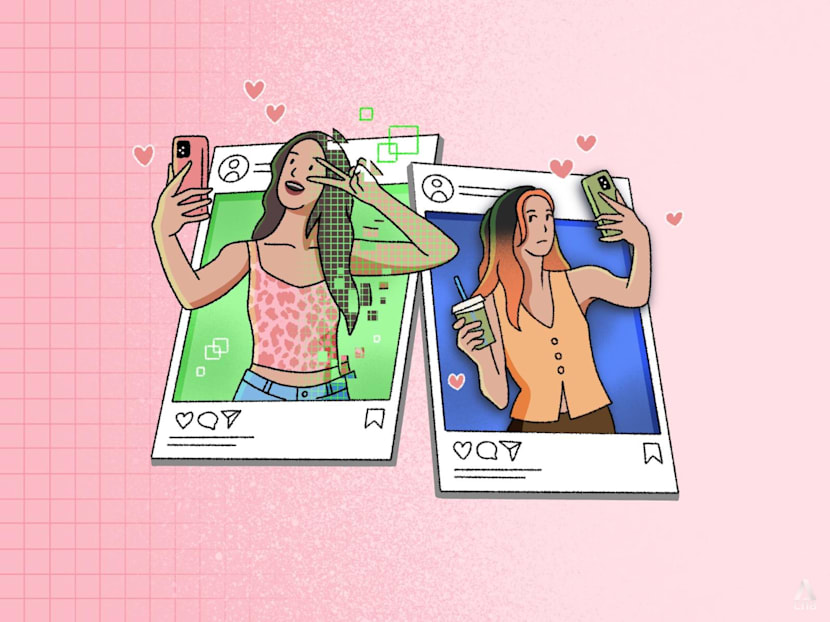
Hyper-realistic influencers generated by artificial intelligence have been on the rise in recent years, sprouting concerns that they might take away jobs from people in the creative industries. (Illustration: Â鶹/Nurjannah Suhaimi)

This audio is generated by an AI tool.


When Spanish influencer Aitana Lopez posts a photo of herself stretching at the gym or strolling through the sun-washed streets of Barcelona, her followers respond instantly.
Tens of thousands of likes, heart-eyed emojis and adoring comments pile up beneath each image. It all looks effortless: a fit, stylish 25-year-old documenting her daily life.
Yet, Aitana cannot do any of these things, because she is not real.
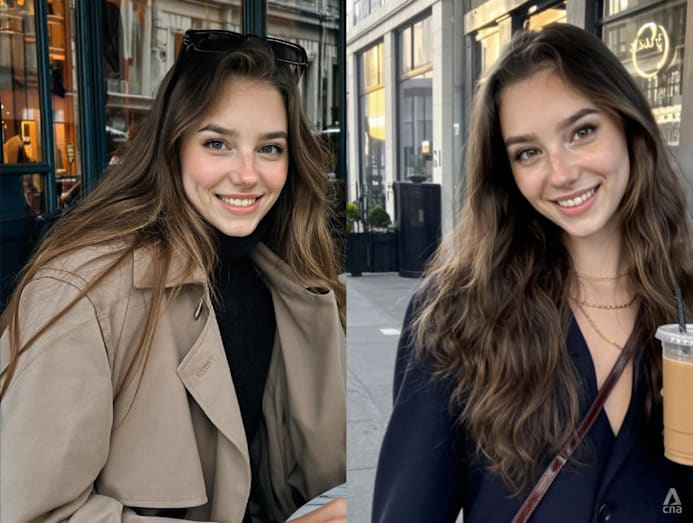
She is a hyper-realistic digital influencer generated using artificial intelligence (AI).
Compared with the virtual influencers that came before her, such as Singapore's Rae and United States-based Lil Miquela, who obviously look like digital avatars, Aitana looks a lot more like your everyday red-carpet model.
Her creators, Barcelona-based agency The Clueless, waxed lyrical about the benefits of having an AI creation like Aitana in response to queries by Â鶹 TODAY.
Its representative Paula Garcia said: "Hyper-realistic AI influencers bring great versatility, as they can adapt much faster and more precisely to each client’s needs.
"AI allows us to work with creativity and immediacy while breaking the barriers of time and space. We can carry out campaigns anywhere in the world without the need for travel, saving both time and costs."
Ms Garcia added that Aitana generates around S$15,000 (US$11,700) a month for the company, and has recently worked with brands such as Amazon and gaming technology company Razer, co-founded by Singaporean entrepreneur Tan Min-Liang.
Aitana is not the only AI influencer drawing attention. Another, Mia Zelu, went viral recently for a picture-perfect Instagram post of her "attending" Wimbledon tennis events in England – until users discovered that she, too, was created with AI.
Mia has 221,000 followers on Instagram and even has a virtual sister called Ana, whose follower count stands at 307,000. Both are labelled in their Instagram bios as creations managed by a company called Zelu Vision House.
Though it is unclear whether the Zelu sisters have earned their creators any money through brand collaborations, "models" similar to them look set to become ubiquitous.

Consulting firm Grand View Research estimated that the global virtual influencer market was valued at US$6.06 billion in 2024 and is projected to reach US$45.88 billion by 2030.
The hyperrealism of AI-generated people has already caused some anger and controversy in Hollywood, when a showreel of AI-generated actress Tilly Norwood made rounds on the internet.
Her Dutch creator Eline Van der Velden, chief executive officer of AI media firm Particle 6, said in September that the synthetic performer is "in talks" with talent agencies.
This drew criticism from A-list actresses such as Emily Blunt, Natasha Lyonne and Whoopi Goldberg. When shown a video of Tilly Norwood on a podcast with Variety, Blunt said: "That's an AI? Good Lord, we're screwed ... That is really, really scary."
The sudden rise of these hyper-realistic figures has ignited debate about what this means for consumers, influencers and the advertising economy at large.
Beyond questions of authenticity, many are asking whether such collaborations are intentionally misleading, and whether AI-generated models are now encroaching on jobs traditionally held by creative professionals, from photographers and production crews to makeup artists and stylists.
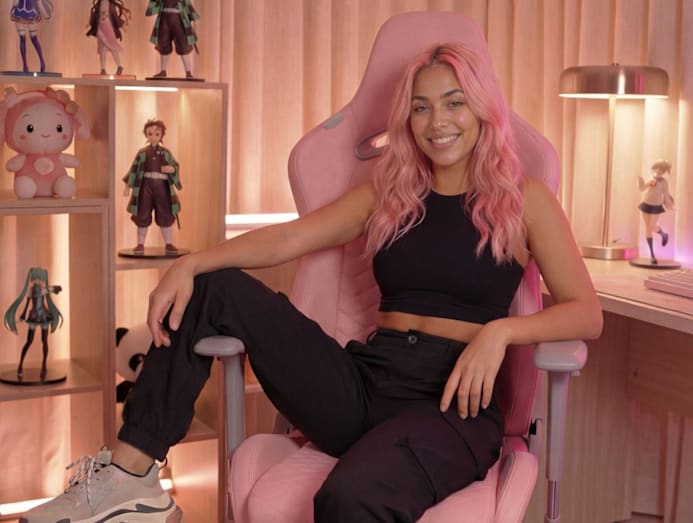
A HUMAN-AI SHOWDOWN
Some advertising agencies in Singapore are already incorporating AI-generated models and influencers into client campaigns. One such firm is Coco Creative Studio.
Its founder and creative director, Mr Jose Jeuland, told Â鶹 TODAY that the agency has been producing AI-assisted advertising visuals at campaign level for major clients in cosmetics, beverages, fashion, hair care and even government agencies.
Mr Jeuland said the agency would "absolutely continue to do so" whenever it makes strategic sense.
However, instead of relying solely on artificial content, the agency sees its strength in hybrid production, blending AI elements with traditional photography and videography to maintain realism and quality.
This might include pairing AI models with real product shots, or compositing human actors into AI-generated environments before handing everything off to professional "re-touchers".
That is how many professionals in the industry would prefer it – for AI to be a collaborator, not a replacement for human professionals.
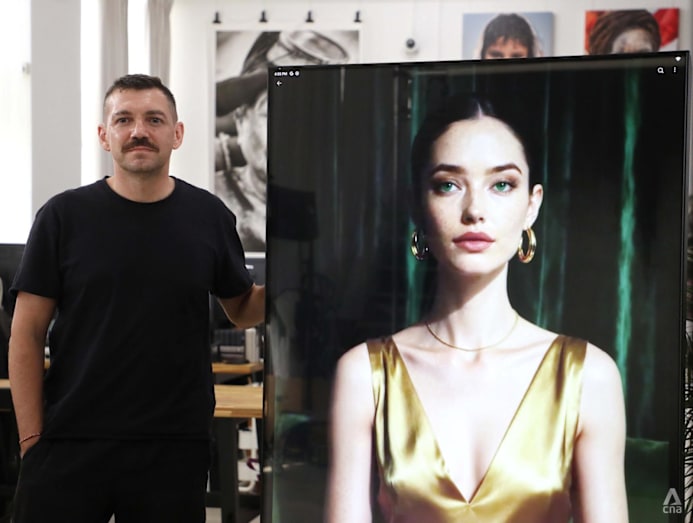
In response to queries from Â鶹 TODAY, the Visual, Audio, Creative Content Professionals Association in Singapore said that fair work opportunities for freelancers must be protected, and brands and agencies should not use AI influencers to undercut fair pay or bypass professional creatives.
"Clear industry guidelines are needed to ensure AI-generated content does not displace human creators without proper consideration and compensation.
"At present, these safeguards are still evolving, making this a murky space that requires vigilance."
The association added that there must be transparency, education and accountability.
"Audiences deserve honesty, and all AI-generated influencers and content should be clearly disclosed.
"When an influencer or persona is fully AI-created, clear disclosure helps maintain trust and prevent misrepresentation."
It also called for intellectual property and consent to be upheld.
"AI influencers are often trained on data derived from real creative works. Freelancers' works, voices, likenesses and styles must never be used without permission, proper licensing and fair remuneration. Respect for copyright is non-negotiable," the association asserted.
In the meantime, influencers in Singapore themselves do not seem too worried about these AI models. Many who were interviewed said that the core of their work is connection, which is something technology cannot easily mimic.
Singapore micro-influencer Gargi Sharma, for instance, said she does not think she can be replaced.
"When brands reach out to (real-life) influencers, they're not just paying for the way they look, they're paying for the connection and community they have built from scratch," she added.
That sense of lived experience, she and others argued, is what gives human influencers their value.
Others point to a growing fatigue with overly polished content, which is something AI tends to produce by default.
Parenting and lifestyle influencer Zhang Shiqi, known online as "Jang Shiki" and whose children appear regularly in her social media posts, said that the hyper-smooth aesthetic of AI often works against engagement.
"AI-generated content can feel too polished ... and it loses the authenticity of interaction with my kids and the product."
Such videos would not resonate with her audience, she added.
Indeed, it is for this reason that not all agencies are as enthusiastic about recommending AI influencers to their clients.
Ms Robyn Chew, the Singapore market lead at social media marketing consultancy VoxEureka, said the firm remains "cautious, though not closed off" about doing so.
"Consumers today aren’t just drawn to aspirational content. They want relatable and sometimes, imperfect, human stories."

GENERATING HYPE, NOT SALES
Even as AI-generated influencers are becoming more common, what is less clear is whether they even work to attract consumers.
An informal straw poll conducted by Â鶹 TODAY with about 75 people under the age of 35 suggested that most consumers were not as enthusiastic about AI influencers as their creators may be.
About 80 per cent of the respondents said they would not trust a product, service or brand promoted by an AI influencer.
For many, the issue came down to credibility and relatability.
Ms Samantha Lim, a 27-year-old healthcare professional, said AI influencers simply would not sway her.
People tend to follow influencers "who reflect your personal values, life experience and socio-economic status", she said, and these are qualities that AI personas – no matter how realistic they look – do not genuinely possess.
Others pointed to the question of whether an AI-generated figure can provide dependable recommendations at all.
Ms Brenda Chan, 26, who works in communications, said she would feel wary about buying something pushed by an AI influencer because she would be "unsure of the credibility" of the endorsement.
If an AI model appeared in sponsored apparel, she said, she would question whether the fit and details shown were truthful or merely virtually generated.
She would consider buying something promoted by an AI influencer only if real humans who had bought the items chime in with positive reviews, she added.
The type of product matters as well.
"I would be more inclined to purchase lower-cost items like clothes, household items and makeup," Ms Chan said. "But not health-related products like supplements, which can be risky, or experience-focused products like travel vouchers."
Her view highlights a trend that is being borne out by some recent research: People may be willing to trust an AI influencer for low-stakes purchases, but for anything experience-related, they would still trust another human being more.
Mr Mimrah Mahmood, vice-president of media, social and consumer intelligence firm Meltwater Asia-Pacific, said that some sectors see three to four times more engagement when using AI influencers compared with human creators – particularly in categories that are "product-heavy" or "specification-based" such as cameras, drones or smartphones.
This aligns with findings pointed out by Associate Professor Donny Soh from the Infocomm Technology Cluster of the Singapore Institute of Technology (SIT).
Referring to a 2024 study by researchers from the University of Zaragoza in Spain, he noted that AI or virtual influencers tend to perform better with “utilitarian� products, meaning items valued for their technical or functional use such as smartphones and appliances.
Human influencers, on the other hand, remain far more effective when it comes to emotionally driven or experience-based products: wellness, fashion, travel, lifestyle and anything requiring the authenticity of personal use.
Notably, the same study did not show significant differences in conversion or purchase intent. This meant that consumers might engage with AI content, but that did not necessarily translate into sales.
That distinction matters, one analyst said. Mr Adam Furness, Asia-Pacific and Japan managing director at partnership management platform Impact.com, cautioned that the current surge in views for AI influencers is likely inflated by novelty.
"When there's something new, there's always a bit of a spike," he said. "People will ask, 'Is this really interesting? I want to check it out and have a look at it'. That’s happening with AI influencers. And brands are asking how they can get involved."
However, higher views or engagement do not automatically equate to real business outcomes.
"They can be really creative with it," Mr Furness added. “But are they actually selling products, or just generating headlines and (building) public relations? Getting eyeballs is one thing, converting them is another. The jury's still out."
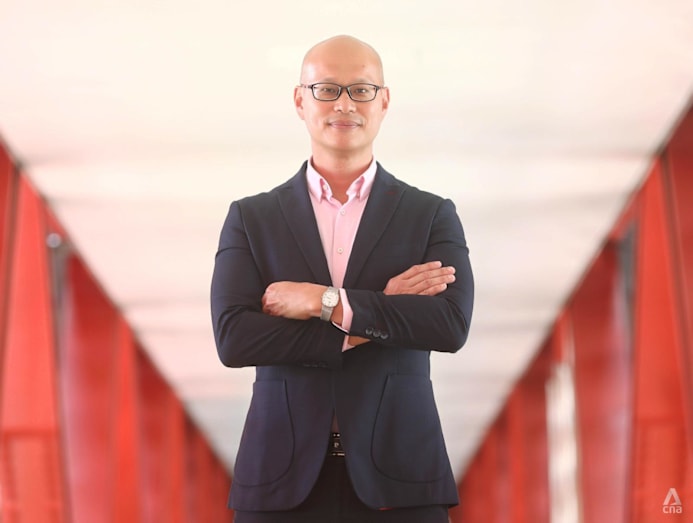
THE GROWING UNEASE OVER AI
What all this points to is that even as AI-generated influencers gain traction among marketing professionals, the broader public remains slightly uneasy about embracing them fully.
A significant part of this wariness stems from the rise of deepfakes, and the increasing difficulty of distinguishing what is real from what is fabricated.
A finding from the We Are Social’s Digital 2026 Global Overview Report showed that 71 per cent of Singaporeans are concerned about telling real content apart from AI-generated visuals.
Ms Naiyen Wang, the creative agency’s Southeast Asia managing director, said that this anxiety would only intensify.
"The greater concern for human influencers is not competition but imitation," she added.
"The rise of AI-generated deepfakes poses real risks, from impersonation and misinformation to scams. We've seen how damaging these can be, affecting everyone from politicians to celebrities and everyday people."
This broader scepticism has already seeped into marketing culture. Multiple brands have begun leaning into "anti-AI" messaging to differentiate themselves.
In the US, Polaroid ran a campaign across Manhattan – including outside Google’s New York headquarters – featuring bus-stop ads declaring: "AI can't generate sand between your toes."
Closer to home, Singaporean tech influencer Ainul Md Razib pointed to the public backlash that Uniqlo Malaysia faced after online users accused the retailer of using AI-generated designs for merchandise created in collaboration with Malaysian food chain Oriental Kopi.
The criticism online was targeted at the quality and inconsistencies of the artwork – for example, a singular prawn without a head – and the decision not to hire real artists when "their business is so good".
The reaction, she said, reflected how sensitive consumers have become to perceived inauthenticity.
"People were already saying things, like, 'Oh, I'm never going to shop at Uniqlo again'. When a brand uses AI, there is this feeling that they don't respect human creativity."


Agencies themselves are also aware of the shifting mood.
Dentsu Creative Singapore, which manages a virtual influencer named Rae, noted that the sheer volume of AI-generated content flooding social platforms may be reducing its impact.
Mr Stan Lim, its chief creative and experience officer, said: “At the moment, with the inundation of AI-generated content, there is a fair bit of creative noise that makes the space crowded and often indistinguishable. AI is everywhere, yet few executions truly move people."
He added: "Timing and intent matter more than novelty ... So until the creative use of hyper-realistic AI influencers can bring true differentiation and relevance to audiences, we think it is important to pause and assess what actually creates value, both for brands and for consumers."
Mr Lenney Leong, founder of marketing agency Get Customers, pointed to how Coca-Cola released an AI-generated Christmas advertisement last month that was greeted with ridicule, with many consumers feeling that it was rushed and inauthentic.
"This reflects a broader sentiment that while AI is exciting, audiences are wary when it feels 'slapped on' without intention."
So where does that leave AI influencers?
Analysts said that the answer for companies looking to market their products cheaply is not to avoid them completely, but to use them more thoughtfully, and in tandem with human creators.
Assoc Prof Donny Soh from SIT said that AI influencers can still work, but only when brands keep the "human touch" visible.
"Brands have to be upfront and show how it's part of a broader creative idea. It feels less like a replacement for humans and more like an experiment in storytelling."
He pointed to a recent campaign in the US involving an AI influencer paired with real-life personality Jojo Siwa to boost sign-ups for the National Marrow Donor Program.
The campaign embraced transparency with its tagline: "She's not real, but the crisis is."
By pairing AI with a real celebrity, the campaign reached 11.3 million Instagram followers and more than 46,100 TikTok users – numbers the organiser considered a strong success.
When it comes to transparency, experts said that it is non-negotiable.
Mr Lyon Poh, partner and head of corporate transformation at auditing and consultancy firm KPMG Singapore, warned that some AI influencers still do not clearly disclose that they are artificial, which should be a red flag for consumers.
"Businesses should clearly and consistently disclose that the influencer is AI-generated," he said.
"AI influencers should not simulate or fabricate human experiences, because this can mislead consumers into believing that they are engaging with a real person, undermining trust."
Used thoughtfully, with transparency, creative purpose and human oversight, AI influencers may still have a role to play. Without those safeguards, then brands risk alienating the very audiences they are trying to win over.
THE FUTURE OF AI INFLUENCERS
As AI-generated content continues to flood social media feeds, are AI influencers the beginning of a new norm, or just a short-lived trend that will soon die out as many people are already experiencing AI fatigue?
For Mr Furness of Impact.com, the answer goes back to trust.
Consumers already view advertising with suspicion, which is why global giants such as Unilever now channel half of their entire marketing budget into working with human key opinion leaders, who include celebrities and influencers, he noted.
"A big company like that has seen the world is moving in a different direction," he said.
"Consumers want to buy from the recommendations of family, friends and content creators. Trust is the currency, and those influencers that have created that authenticity have become really powerful."
AI influencers, he added, can certainly help brands generate attention – but attention does not necessarily translate to sales.
He pointed to Impact.com data, which showed that particularly in Southeast Asia, nano and micro influencers, who have between 1,000 and 100,000 followers, often deliver better return on investment for companies compared with mega influencers who typically have upwards of a million followers, simply because audiences perceive them as more authentic.
That is why Mr Furness sees AI-generated influencers as a fad that will eventually "die off".
There are others, though, who envision a more nuanced future.
Ms Wang of We Are Social predicts that the trajectory of AI influencers depends heavily on how the technology evolves and how people choose to use it.
As more individuals turn to AI for companionship, conversation and creative collaboration, she believes that there is room for AI influencers to become more than just polished digital mannequins.
"Over the next few years, we're likely to see them become more dynamic, interactive and emotionally responsive,� she said. “That could enable new forms of engagement, rather than simply mimicking humans.
"If that evolution happens, AI influencers could play a complementary role in the ecosystem, offering brands innovative ways to experiment with storytelling or audience engagement.
However, she cautioned: "If they remain static or purely aesthetic, they risk becoming background noise as audiences continue to crave reality."
Either way, the consensus is clear: AI influencers will not replace human creators entirely, and looking perfect (and perfectly realistic) is the least important trait for an influencer.
Mr Ian Jeevan, a travel and lifestyle influencer with more than 200,000 followers on vidoe-sharing platform TikTok, said that he was "not worried at all" that AI influencers would come for his rice bowl.
"We have very different niches. I'm an actual person who has feelings and I'm able to relate to real-life issues."
"There's no way an AI character can replicate that to the same extent."