He was a racehorse jockey, pub owner, property agent. Now add TikTok food reviewer and mental wellness proponent
Thousands know him as a TikTok food reviewer, but Mr HS Chan was once a race jockey living by discipline and speed.
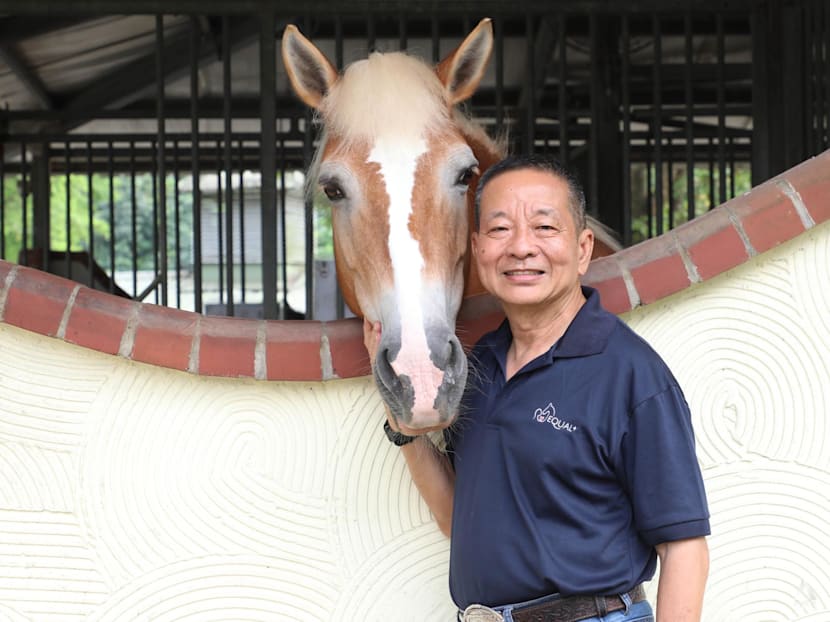
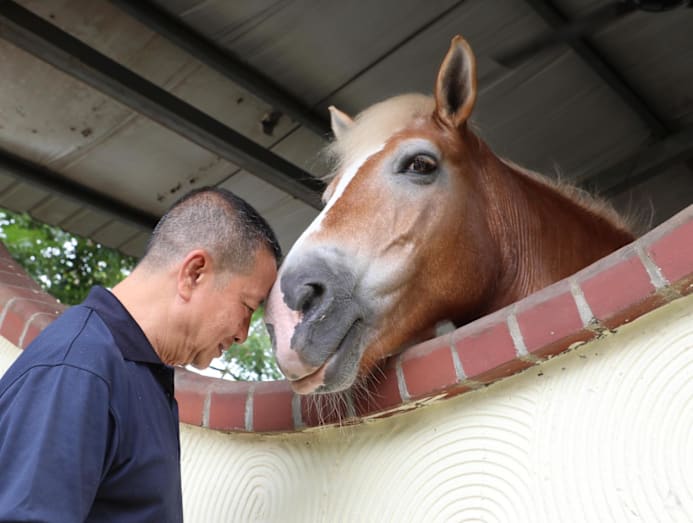
Mr Clement Chan, 66, posing with Caterpillar, one of the horses at Equal, a charity offering equine-assisted therapy, where he works as a stable and operations supervisor, on Dec 11, 2025. (Photo: Â鶹/Alyssa Tan)

This audio is generated by an AI tool.


In a sea of food reviewers, Mr Clement Chan Hua Swee easily stands out for his sunny grin and trademark thumbs-up coupled with the refrain, "Go, try this one".
Before our first meeting, I was immensely curious about the man better known as "HS Chan". Would the 66-year-old afford me the same warmth and humour in person as he does to thousands on TikTok?
Mere minutes into our conversation, he launched into an animated soliloquy about his recent adventures to hunt down the best bak chor mee (minced pork noodles) in Singapore. It immediately became clear that his cheerful manner is anything but a performance.
For Mr Chan, though, food holds a much more complex meaning than his easygoing manner may tell.
Throughout his young adulthood, food was a simple pleasure in which he could never fully indulge. As a racehorse jockey, he often went beyond Singapore's borders to the Malaysian cities of Kuala Lumpur, Ipoh and Penang.
A lifelong foodie, he delighted in the local hawker fare such as dark-sauced wonton mee, yet his strict jockey diet meant that he could savour it all only by sight and smell – just one of many rules and regulations that governed his career and life as a professional rider.
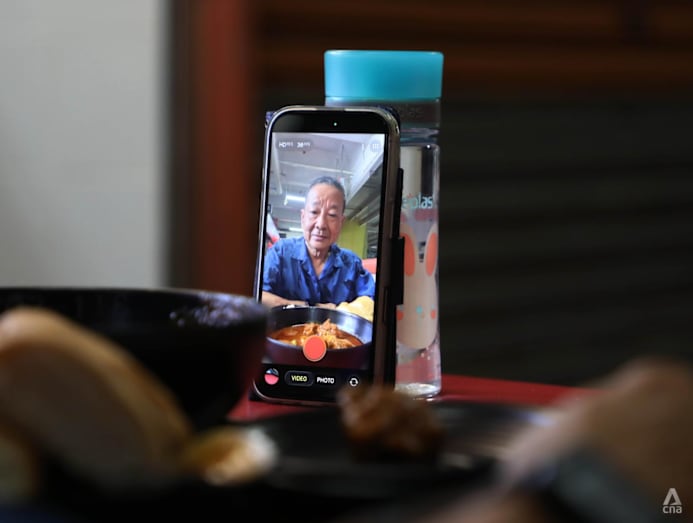
Such a strict regimen over several years may have taken a toll on anyone else's mental health, but Mr Chan seems to have been born with a natural, healthy appetite for challenge and competition.
Even now, as a senior, the thrill he once chased on the track shows up for him in tiny, everyday moments: You might be waiting with throngs of people to board a crowded MRT train, but for Mr Chan, it's the start of yet another "race" – albeit one that's small and inconsequential compared to the big, glamorous horse races in which he used to compete.
He would count down to the MRT platform doors opening and imagine that it was the gates opening during races, so he may try to beat the crowd once it does, similar to when he was back at the starting line.
He laughed heartily as he described this habit to me, brushing it off as a silly quirk. But it is an emblem of the competitive spark and forward momentum that have enabled him to take on life's many twists and turns at full gallop.
GIDDY-UP INTO HORSEMANSHIP
Back in 1977, Mr Chan found himself at a crossroads at the age of 18, when he discovered that he was too light-framed for full-time National Service.
"At 157cm and around 47kg, I was (considered) both underweight and under-height," he recalled.
Realising that he was limited in many ways by his small stature, he began thinking seriously about his future.
Encouraged by older friends and a newspaper advertisement, he took a chance and enrolled in the Singapore Turf Club's jockey school. Within a month, he knew he had found his path.
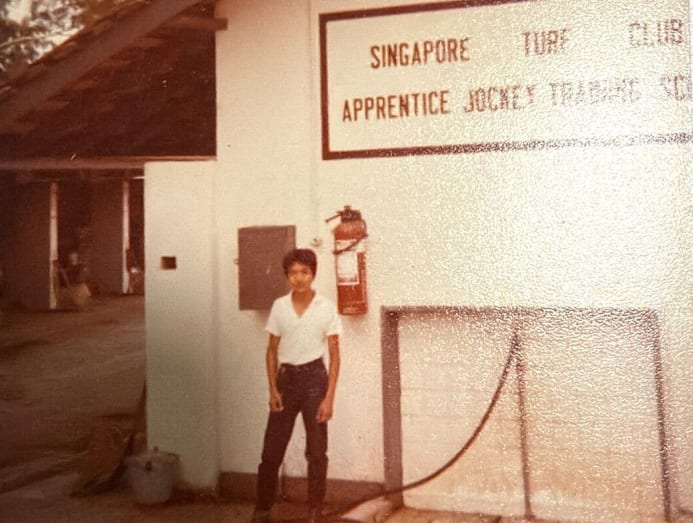
For over two years, he lived on campus at the former Bukit Timah Turf Club as an apprentice jockey. Life as a horseman was strict and structured. Each day started with him rising before the sun at around 5am to tend to his assigned horses.
His family was naturally concerned about the risk of serious injuries but other than that, they did not really understand the sport, Mr Chan said.
To his loved ones, it seemed like the rigorous path of any professional athlete, but jockey training was not just about riding technique or mastering barrier trials.
He had to also learn to feed, groom and care for the horses, tending to their health and well-being as closely as he did his own. He couldn't just be a rider; he had to become a true horseman.
"It's just like being a Formula 1 racer," he said. "Before you even race, you must know about the car and its engine. How does it work? How (do I) fully 'burst' its power?"
Relationships with fellow apprentices, often close in age, provided camaraderie that has lasted decades even till today.
RACING HIGHS AND LIFE'S CURVEBALLS
Upon graduating from jockey school in 1980, "real jockey life" began for Mr Chan, the discipline he had learnt in school now bolstered by the exhilaration of competition.
He began racing while serving his apprenticeship under a renowned gentleman trainer, the late Keith Daniels, before turning full-fledged rider in 1983.
The 5am risings continued. So did the daily demands of track work, fitness and weight management, as well as paying meticulous attention to the feeding, grooming and health of the horses.
Only now, he had to add studying to the mix, too.
"Before each race, you have to do your homework. Which are the horses that will challenge you in the last 100 metres? You have to plan," he said.
He lit up as he recounted stories from these races, gesturing animatedly as he described the excitement that filled him when the gates opened at the start of each one.
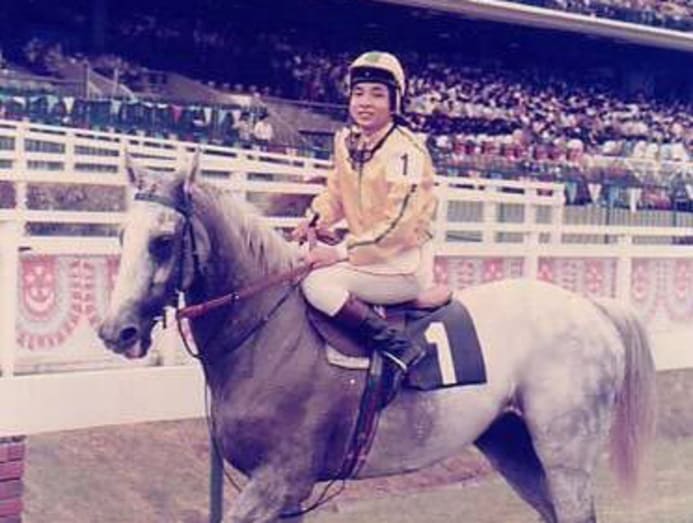
Some horses left a lasting impression. He recalled riding one, Misty Line, to three victories and nurturing another, Workaholic, from a raw recruit to a champion.
However, behind the glamour of the racetrack, the thrill was never without risk. One morning during routine track work, a horse's kick broke his right shin, forcing a seven-month pause from the saddle.
Being at "the peak" of his racing career, Mr Chan candidly expressed his disappointment, but he also showed a remarkable calm despite what must have been a devastating accident. "I accepted that it's a jockey's life," he said.
He made a comeback the following year in 1985, with one of the strongest performances of his career – four wins and 10 runner-up finishes.
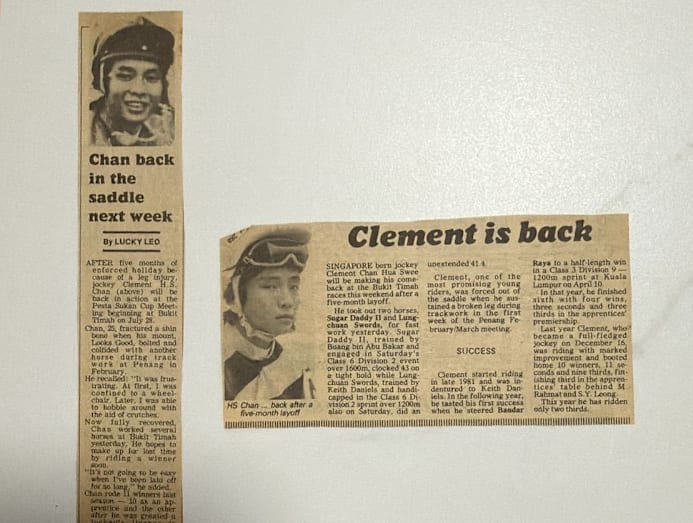
Clearly, he is well-versed in rolling with the punches, but even this setback was minor compared to what happened four years later.
His first wife died of cervical cancer in her early 30s, leaving him to care for their one-year-old daughter alone.
The tragedy forced him to make a bold decision to give up racing altogether, bringing an end to a career that saw him record at least 14 wins in the 1980s.
"My (biggest) fear was not dying after a fall. It was becoming paralysed," he said. "Then how? My daughter was still a baby, she needed me."
FROM HOOVES TO HUSTLE
Immediately after leaving the racetrack, he became a stable supervisor for a leading horse trainer, overseeing daily routines, feeding schedules and other aspects such as injury prevention for the animals – skills that would serve him well later in life.
After about a year, he considered becoming a horse trainer himself, but quickly realised that he was too young to be taken seriously.
"During my time, people would not respect you or trust you with their horses (in your 30s)," he said.
Mr Chan decided it was time to venture out of the stables for the first time in his adult life and entered the nightlife scene.
Over the next three to four years, he ran three pubs: Eternal Flame at the former Katong People's Park, the Country Pub along East Coast Road, and Clement's Place in Tanjong Pagar, all of which are now shuttered.
For one so used to early mornings and regimented routines, pub life proved to be a rocky 180-degree change for Mr Chan. But once he managed to adapt to the unpredictable rhythms and demands of nightlife, he found it easier to put his knack for managing routines, people and relationships to effective use in the completely new setting.
However, even as he got better at the pub business, he found himself tiring of it.
"The fun part was partying every night. But after a while, you just don't want to do that anymore," he said.
By chance, he was introduced to the world of real estate through a few pub regulars who were property agents.
He found himself drawn to the thrill of close-drawn negotiation and deal-closing which, in many ways, sounded much more akin to racing to him than the pub business had been.
He recalled one weekend where he managed to close a staggering seven property deals. I cringed at the prospect of so much pressure in such a short time, but Mr Chan seemed to have nothing but fond memories of those 48 hours.
"It's just like being a jockey," he said, grinning. "Once you get lucky, you have to seize it."
Yet, after nearly a decade in real estate, the ups and downs of the industry left him craving stability.
"I always told myself that horses and horse racing are in my blood," Mr Chan said. "I must go back to the world I belong to."
BACK TO THE STABLES
In 2003, while out to dinner one night, Mr Chan fortuitously ran into Mr Phan Tjun Sern – the owner of horse racing publication, Punters' Way – who suggested that Mr Chan try his hand at analysing races.
This seemed like a natural next step, so he took it. What he did not expect was that the job made him miss riding more than anything.
Turning up each day at Kranji racetrack at 6am to assess the physical condition of horses as they were prepared by trainers and riders, Mr Chan often found himself imagining himself in the shoes of the jockeys in the thick of race preparation, already feeling the buzz of anticipation – a buzz that could never become more.
At the same time, he discovered that his innate meticulousness and organisational skills made handling the vast amounts of horse and race data second nature for him. After each morning, he would spend hours in his office each day translating his observations into predictions, using pace, sectional times and other data.
He soon found contentment in watching from the press box rather than being out on the track. He was even able to latch on to a new thrill: Getting race predictions right.
Mr Chan recalled a standout occasion when out of 10 races, seven or eight of his first-choice selections won.
He stayed in the analyst role for 16 years – longer than any other job he had ever held. He reckoned that he likely would have stayed even longer, if it wasn't for a visit he paid to a friend working as a trainer at Equal, a charity offering equine-assisted therapy.
"I (realised that I) missed being able to interact with the horses," he said. "This is the place I want to be."
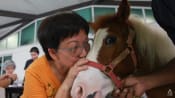
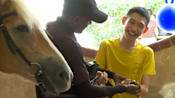
He wasted no time taking up a new role: stable and operations supervisor, helping vulnerable persons such as children and seniors connect with horses to slow down, build confidence and reduce stress levels or trauma-induced symptoms.
"For me, this is the magic of horses," he said.
While the pace is gentler than life on the racetrack, the work still carries its own demands.
One of the challenges he relishes is preparing the horses for therapy programmes, ensuring they remain in good health, and making sure they return safely after each session – a responsibility that draws on decades of horsemanship.
Now, just over six years on, he has earned himself a reputation for being organised, reliable and consistent. His colleagues told me that the charity "cannot run without Uncle Clement".
Ms Lee Siew Yian, head of philanthropy and partnerships at Equal, likened Mr Chan to a horse.
"Steady and non-judgemental, able to handle anyone, from young children to our elderly beneficiaries."
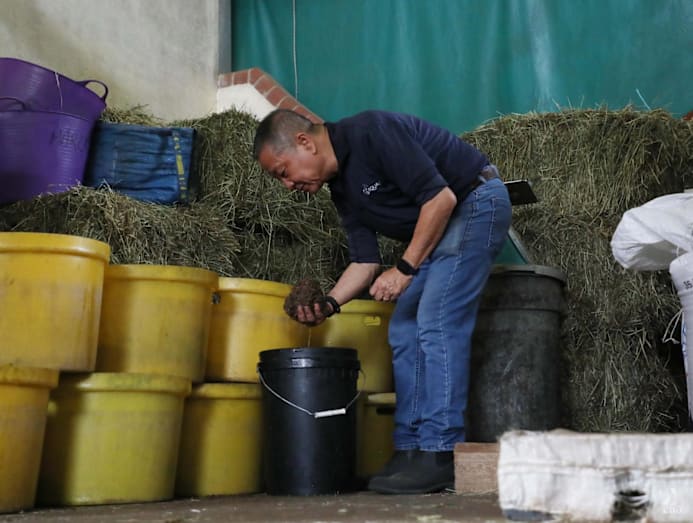
Years of thrill-chasing seem to have done nothing to dull Mr Chan's ability to be a team player.
On the eve of National Day this August, a potential horse sponsor called up Ms Lee, wishing to visit the stables the next day. She informed Mr Chan in accordance with protocol, not expecting him to show up there.
The next morning, she was surprised to receive a message: He was just 15 minutes away from the stables.
Ms Lee said that Mr Chan's warmth, attentiveness and genuine enthusiasm left such an impression on the visitor that she signed up for sponsorship on the spot.
A grateful Ms Lee took Mr Chan out for ice cream afterwards.
"Of course, he was videoing for TikTok," she said with a laugh. "Very consistent, as always."
Introduced to the short-video platform by a friend in 2023, Mr Chan initially brushed it off as something he couldn't do, given his advanced age.
However, he found himself once again drawn towards the prospect of a new challenge. He downloaded the TikTok application and began experimenting somewhat clumsily with a mix of random videos covering a range of subjects from his plants to cooking tips.
Despite his initial protests that TikTok is "for young fellas", Mr Chan remains a keen, quick learner. When he learnt that consistency mattered on the algorithm-driven platform, he began posting daily until he found his footing.
Today, with more than 6,000 followers, his page has become a modest but heartfelt mission to support hawkers whom he worries are struggling.
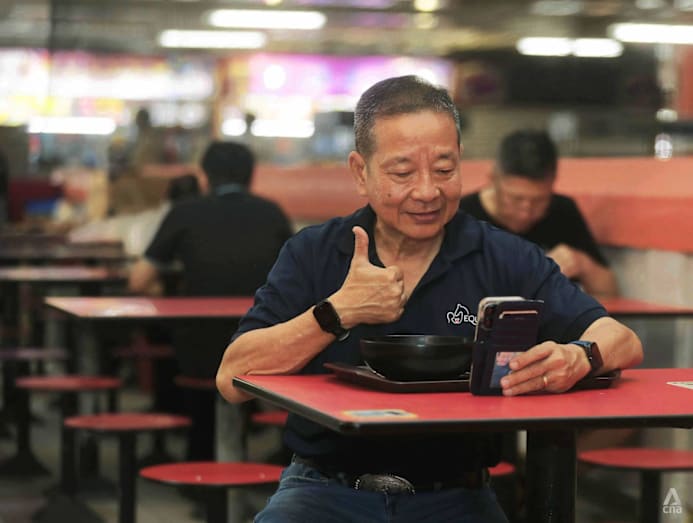
Now remarried, Mr Chan is a proud grandfather to a nine-year-old granddaughter who "loves horses, too, but definitely not as much as me".
Despite his easy, warm humour, the former jockey does not shy away from the hard realities of loss and reinvention – a repeating cycle he has navigated time and again throughout his storied life.
His advice to others grappling with similar realities is simple: Be brave when challenges arrive, because they always will.
For all his impressive accomplishments, he has simple hopes for his legacy: "I want people to remember me as this happy and jovial guy who always recommends you the best food to eat, and also for my work at Equal, where we help people with their mental health (with) love."