Am I giving my kids too much? Here's how I try to treat them without spoiling them
Ms Jaslyn Ng wants her children to enjoy life's little luxuries, but more importantly, she wants them to do so with a sense of gratitude and responsibility.
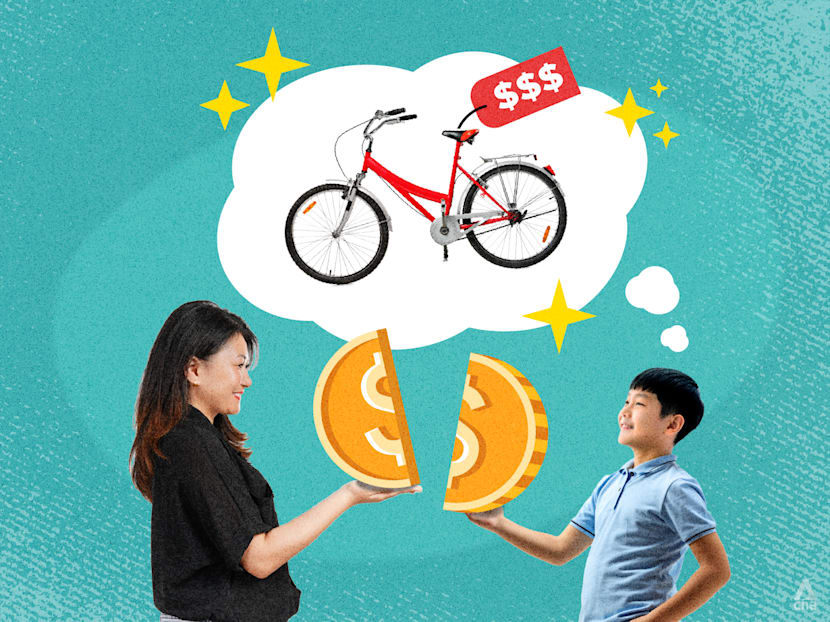
One practice the writer adheres to is to make clear with her children that while she will pay for their needs including clothes and food, they have to co-pay for things they want, such as new toys. (Illustration: Â鶹/Nurjannah Suhaimi)

This audio is generated by an AI tool.


The question came to me: "Mummy, can we take business class next time?"
Since the COVID-19 pandemic, I've made it a point to travel as much as I can with my kids during the school holidays.
In the beginning, they were simply happy to pack their luggage and hop on a plane, even if it was just an economy flight to nearby cities such as Kuala Lumpur in Malaysia and Bangkok in Thailand.
Each time, we would walk past the business-class cabin on our way to our seats farther down the aisle.
Back then, they barely noticed the welcome drinks, the wider seats or the bigger screens that greeted those privileged enough to sit in front. To them, to travel at all was thrill enough.
However, somewhere along the way, that changed. My kids started noticing what they didn't have, instead of what they did.
And soon, they started asking for more.
BACK THEN, LESS WAS MORE
I grew up in an average-income family. My father was the sole breadwinner, a technician who worked hard to raise three children, all the way through tertiary education.
One of my fondest memories was how he would take us to Punggol for a chilli crab feast whenever I topped my class at the end of the year. It only happened a handful of times, but I cherished these rare treats.
Money was very tight, so we didn't get many toys like the other kids. I remember he deliberated for a long time when I asked him to buy me a Mickey Mouse gold necklace for S$200 (US$155), which he eventually bought.


The first time we travelled overseas was to Bangkok, when I was 17. In contrast, the first plane ride my children took was when they were three months old.
These days, we often see children receiving piles of birthday presents, unwrapping them excitedly, playing with them for a few days, then setting them aside.
Back then, things were different. We formed deep attachments to that one special toy or teddy bear, precisely because we didn't have many of them.
In today's world, and having fewer children than their parents did.
Naturally, we want to give our kids the best, whether it's to give them the childhood we never could afford or just to see the smiles on their faces.
But where do we draw the line between giving and spoiling?
While my childhood may not have been full of toys, the simple moments and joys I had then remain vivid in my memory. I learnt from an early age that less is more – to appreciate what I have rather than covet what I don't, especially with material possessions.
This simplicity hasn't just taught me appreciation, it has taught me discipline.
Now, these are the lessons I'm trying to impart to my own two children, aged 13 and 11.
Here are some strategies I've developed to give my kids freedom, but within boundaries.
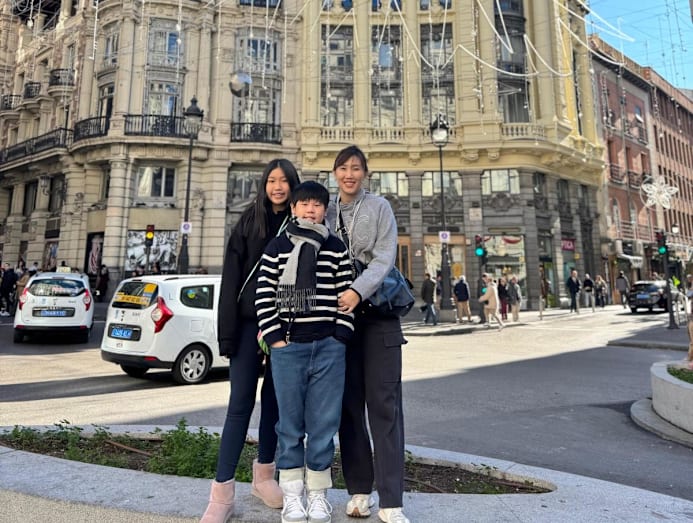
THE POWER OF CO-PAY
I'm sure we've all seen it – a child wailing on the ground because they were denied a toy or tidbit. Often, parents give in just to stop their kid from causing a scene.
Before I became a mother, I knew that this was something I would not tolerate.
So, I have instilled this concept in my children: Mummy pays for your needs, such as your clothes, food and school expenses. But for your wants, you'll have to co-pay.
This strategy has worked wonders. Not only did it save me from buying unnecessary toys, but it also taught them valuable life lessons that schools can't always provide.
First, it is a quick litmus test. It helps them decide whether that "want" is something they truly value enough to spend their own money on it.
Second, it teaches the concept of opportunity cost. In life, every choice has a price. The question is: Are you willing to pay for it?
Third, it nurtures responsibility and commitment.
I remember when my son was eight and asked to take up aikido. As parents, we don't mind paying for enrichment activities, but what we fear most is how short-lived kids' enthusiasm can be.
So I told him: "If you're really keen, you'll co-pay S$2 from your weekly S$12 allowance. That leaves you with S$10 a week."
He thought about it seriously for a good 10 minutes before replying, "Yes, I agree. Please deduct S$2 from my allowance.�
He went on to train for two years, earning his purple belt, until he eventually had to stop when his school's badminton training became too demanding.

LETTING THEM LEARN HOW TO VALUE MONEY, NOT THINGS
When my oldest child first entered primary school, we gave her a lump sum of S$10 a week. There was no guidance from us on how she should spend the money.
By the third day of school, she had only S$2 left in her wallet.
Curious, I asked what happened. She sheepishly explained that she had gone "shopping" at the school bookshop and bought pens and erasers as gifts for her friends.
That's when I realised something important – financial literacy isn't innate. We cannot assume that kids would know how to handle what feels like a "windfall" to them.
After that episode, we introduced a simple rule: save before you spend. She had to set aside a portion of her allowance each week before taking the rest to school for recess.
This wasn't really about restricting her. When kids are young, they don't really understand ideas like budgeting yet, so I felt it was better to start with something simple and consistent, like getting into the habit of saving first.
Over time, once that routine sticks, it turns into something they choose to do themselves. That's when it becomes real "maturity" for them, in that sense.
The learning process continues as my daughter grows older. When she entered secondary school, she began travelling to school on her own, and we increased her weekly allowance to S$50.
One morning, my phone rang at 7.15am. That's when I heard her sleepy voice over the call: "Mum, can I take a taxi to school? I overslept."
I agreed, but added a caveat: "Yes, of course you can. Please pay me back when you get home."
The fare came to S$32, leaving her with S$18 of her weekly allowance.
While I want my children to value money and avoid being spoiled, I also don't want to deny them experiences and core memories that could define their childhood.
Spending S$32 on a one-off taxi ride so my daughter can get a bit more sleep was not a significant expense. And admittedly, it was not easy to watch her grapple with regret as she spent more than half her allowance on a car ride.
But I told myself this was a necessary part of the learning process, and I know it will pay off because the incident taught her accountability and the importance of taking responsibility for her actions. Even if it means she can't sleep in for a few more minutes.
GIFT OR SPLURGE?
While I have taken steps to teach my children the value of money, I've also given them things I could never have imagined having when I was their age.
Just last year, the kids finally took their first business-class flight on a Middle Eastern airline to Europe.
It was meant to be a source of motivation for my daughter to do her best in her Primary School Leaving Examination (PSLE). I had bought the tickets a year in advance, taking advantage of promotional fares to score a good deal, albeit still pricier than an economy-class ticket.
In the end, she didn't score as well as she had hoped. But I knew she had given her all, and that mattered more.
It turned out to be our most memorable trip.
In Spain, my daughter met one of her favourite Formula 1 drivers, Sergio Perez. On another leg of the journey, my son met football legends Roberto Carlos and Iker Casillas.
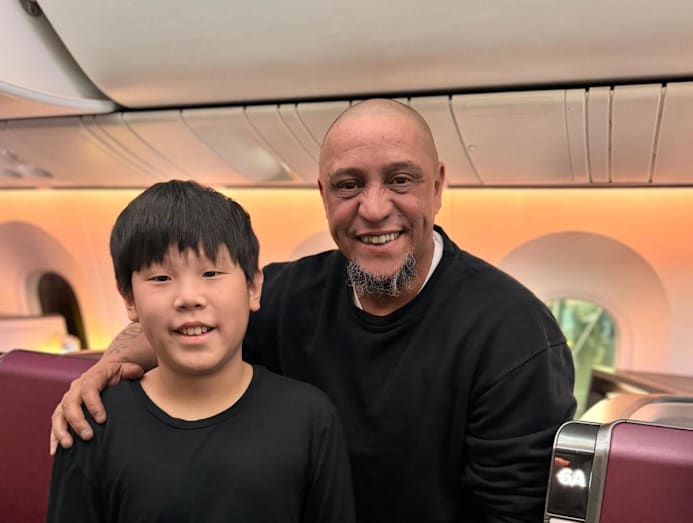
He even had his Real Madrid jersey with him and got it autographed, a dream come true. Seeing their excitement made the whole experience unforgettable for me, too.
While some might argue that a business-class trip to Europe would spoil my children, I think it was money well spent because I wanted to celebrate my daughter's completion of PSLE – a meaningful closure to the first major leg of her academic journey.
While I want my children to value money and avoid being spoiled, I also don't want to deny them experiences and core memories that could define their childhood.
To me, such things are one-off events – experiences and activities that we splurge on precisely because we want them to be extra special for our kids.
These should not be conflated with their day-to-day lives, where they learn responsibility and accountability by budgeting their own allowances or by helping me compare grocery prices at the supermarket.
That's not to say I'm perfect. Even now, I'm still treading that fine line between treating my children and not spoiling them. But what's important to me is that I raise children who understand the value of money, who act with integrity and who take responsibility for their choices.
And these are the lessons that will help them thrive – not just in school, but in life – without sacrificing their childhood experiences.
Jaslyn Ng is a financial services director and a mother of two.