Thailand, Cambodia to hold ceasefire talks on Dec 24, as ASEAN calls for ‘maximum restraint’
Wednesday’s planned meeting will take place in Thailand’s Chanthaburi province - near the border with Cambodia - under an existing joint border framework, says Thai Foreign Minister Sihasak Phuangketkeow.
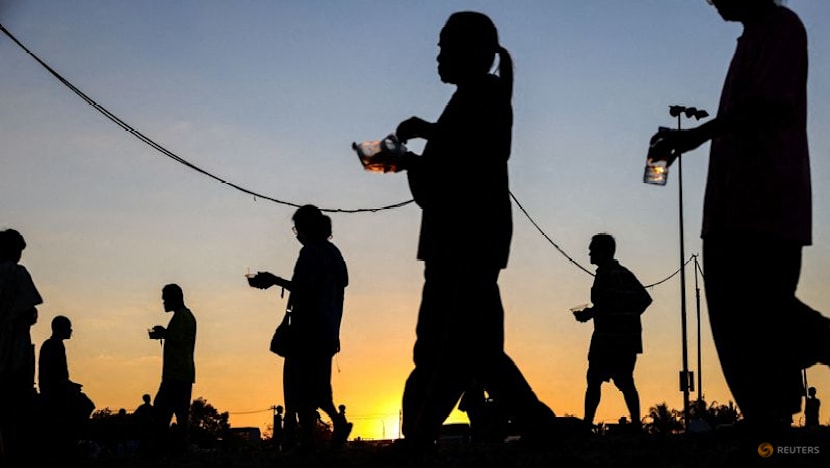
Displaced people receive food at a temporary shelter amid clashes between Thailand and Cambodia, in Thailand's Buriram province on Dec 16, 2025. (File photo: Reuters/Athit Perawongmetha)

This audio is generated by an AI tool.

KUALA LUMPUR: Defence officials from Thailand and Cambodia will hold ceasefire talks on Wednesday (Dec 24), as Southeast Asian foreign ministers met on Monday and urged the two sides to “exercise maximum restraint” in their border conflict.
Foreign ministers from the Association of Southeast Asian Nations (ASEAN) met in Kuala Lumpur on Monday to discuss the conflict, and the bloc said in a chair’s statement that the ministers “welcomed the discussions on resumption of the ceasefire and cessation of hostilities”.
“The GBC (General Border Committee, an existing bilateral mechanism between the two neighbours) will convene on Dec 24, 2025 to discuss the implementation and verification of the ceasefire,” the statement read.
“The ASEAN Foreign Ministers expressed hope for de-escalation of hostilities as soon as possible.”
The renewed fighting between the Southeast Asian neighbours this month has killed at least 22 people in Thailand and 19 in Cambodia, according to officials.
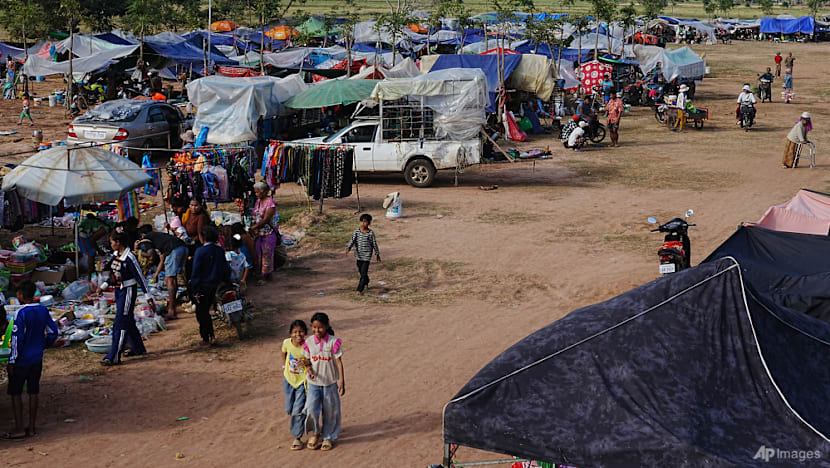
Phnom Penh said on Sunday that more than half a million Cambodians were displaced from their homes in recent weeks, following deadly border clashes with Thailand.
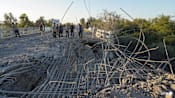
According to the ASEAN chair’s statement, the ASEAN foreign ministers expressed “serious concerns” on the continued tensions and hostilities, which have resulted in “significant casualties, damage to civilian infrastructure, and displacement of civilians on both sides of the border”.
They also called on both parties to ensure that civilians residing in the affected border areas could return “to their homes and normal livelihoods”.
“The meeting urged Cambodia and Thailand to exercise maximum restraint and take immediate steps towards the cessation of all forms of hostilities,” the statement added, urging both countries to “restore mutual trust and confidence” and return to dialogue.
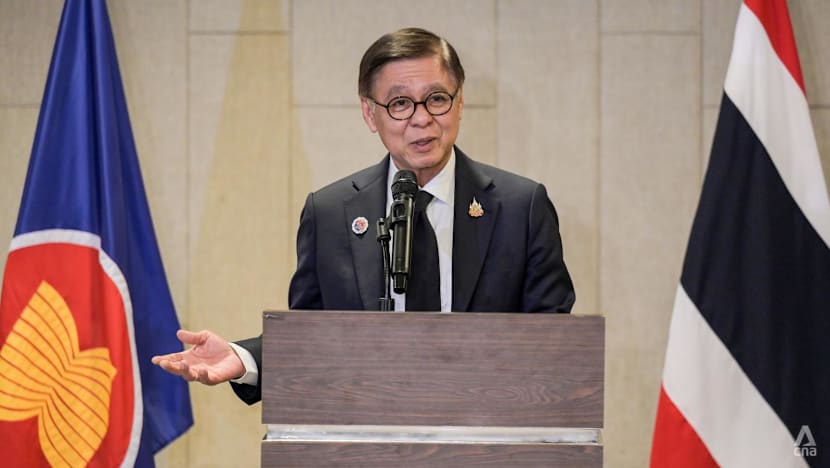
Thailand’s Foreign Minister Sihasak Phuangketkeow told reporters on Monday that the militaries of both countries should “meet as soon as possible” to discuss the ceasefire, and that the Dec 24 date was proposed by Cambodia.
“And this time, let's trash out the details. Make sure that the ceasefire reflects the situation on the ground. And the ceasefire is one that really holds and both sides are going to fully respect the ceasefire,” he said after the meeting.
Sihasak said Wednesday’s planned meeting will take place in Thailand’s Chanthaburi province - near the border with Cambodia - under an existing GBC framework, and that both sides will take “as much time as needed” to come up with an agreement.
“Because you cannot just declare a ceasefire and expect a ceasefire to happen, right? We want a firm commitment. We must have a detailed implementation plan,” he said.
“As long as they need to cover everything. I’m not sure, because the military has to work these issues out with the Cambodian side, and I don’t want to speculate.”
Cambodia's interior ministry, noting preparations for Wednesday's meeting, said it welcomed the regional efforts to sustain a truce and end hostilities.
"We remain optimistic that the Thai side will demonstrate sincerity in fully implementing the ceasefire in line with ASEAN's objectives," it said in a statement.
In the chair’s statement, Malaysia said that it had briefed the special meeting on Prime Minister Anwar Ibrahim’s efforts to encourage both Cambodia and Thailand to cease hostilities.
“The meeting reaffirmed the commitment to ASEAN unity and solidarity, as well as ASEAN Centrality in ensuring regional peace, security, stability and prosperity, in accordance with the ASEAN Charter,” the statement read.
Cambodia said on Monday that the Thai military had deployed fighter jets to bomb areas of Siem Reap and Preah Vihear provinces, just hours after the crisis talks were held.
“CRITICAL JUNCTURE IN REGIONAL AND GLOBAL AFFAIRS”
Earlier in the day, in his opening remarks ahead of the special meeting, Malaysia Foreign Minister Mohamad Hasan said that the ASEAN grouping “stands at a critical juncture in regional and global affairs”.
Malaysia is the current chair of the bloc, with the Philippines set to take over officially on Jan 1.
Mohamad had warned that geopolitical disruptions “challenge the very foundations of our regional order”.
“This threatens ASEAN’s credibility as one of the most peaceful and successful regional organisations and integration projects in modern history,” he told officials.
Mohamad added that Anwar has urged both Thailand and Cambodia to undertake full and effective implementation of previous ceasefire agreements as well as the Kuala Lumpur Peace Accord that was signed on Oct 26.
In his remarks, Mohamad stressed that ASEAN must do whatever is necessary to maintain regional peace and stability.
“Our goal goes beyond de-escalating the tension. We must intensify trust-building among the conflicting parties and provide the horizons for dialogue despite the prevailing differences,” he said.
EASING TENSION, SAFEGUARDING REGIONAL PEACE
Ahead of Monday’s special ASEAN meeting, Anwar urged both countries to “uphold the spirit of dialogue, wisdom and mutual respect” to ease tensions and safeguard regional peace and stability.
Anwar had said that the meeting would be used to present facts from the ground, including findings from an ASEAN observer team and US satellite imagery.
The meeting “will serve as an appropriate and constructive platform for the two countries to engage in open negotiations, resolve their differences peacefully, and work towards a just and lasting solution”, he wrote on social media on Dec 21.
In a Facebook post, Singapore's Minister for Foreign Affairs Vivian Balakrishnan said that Singapore is "deeply concerned" about the situation between Thailand and Cambodia and reports of casualties on both sides.
Dr Balakrishnan called the ASEAN foreign minister meeting "an important step" to discussing the resumption of the ceasefire and that Singapore welcomes the convening of ceasefire talks.
"I urged our colleagues from both sides to de-escalate the situation, resume talks and resolve their dispute peacefully," he added.
"As ASEAN, our collective future is brighter only if we stand united."
Thailand and Cambodia have long disputed sovereignty over several areas along their land border.
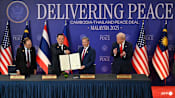
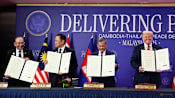
Tensions escalated in July after a Cambodian soldier was killed during a brief exchange of gunfire, leading to five days of fighting. United States President Donald Trump then brokered a ceasefire agreement, which halted the fighting.
In October, Trump backed a follow-on joint declaration on the sidelines of the ASEAN Summit in Kuala Lumpur, touting new trade deals with Thailand and Cambodia after they agreed to prolong their ceasefire.
But Thailand suspended the agreement the following month as the two sides then traded accusations of fresh clashes.
US NOT INVOLVED IN NEW ROUNDS OF TALKS
Sihasak said Thailand sometimes felt it was “in a rush” to sign the October declaration, because the US wanted it done in time for Trump’s visit to the ASEAN Summit in Kuala Lumpur.
Sihasak said the US was not involved in this round of talks.
“This is the ASEAN way - ASEAN centrality. We appreciated the efforts of the US, but everything was done so that they could be signed when President Trump came to attend the ASEAN Summit,” he said.
“But sometimes, we cannot always operate on a fixed timeframe. We really (need) time to discuss everything. And in the end, it's about Thailand and Cambodia working things out.
“And that's why I said that at the beginning, we should have worked it out bilaterally, but they (Cambodia) were interested in going international.”
On Dec 12, Trump announced on social media that Thailand and Cambodia have agreed to renew a ceasefire following calls with Thai Prime Minister Anutin Charnvirakul and Cambodian Prime Minister Hun Manet.
But Anutin said there was no ceasefire yet with Cambodia and fighting was ongoing.
Writing in a commentary for Â鶹, one observer said the broken ceasefire is a lesson in the limits of US leverage, with domestic considerations more pertinent.
“It is very probable that only after the (Thai) election is settled, will there be any real chance to reset relations between the neighbours,” the observer wrote.
Thailand is set to go to the polls on Feb 8, after Anutin dissolved parliament earlier in December. The move came after Anutin fell out with the opposition People's Party, the largest grouping in parliament, plunging Southeast Asia's second-largest economy into political turmoil.