analysis East Asia
China steps up mineral diplomacy in rare earth power race
China launched the International Economic and Trade Cooperation Initiative on Green Mining and Minerals to build greener, more stable supply chains - and experts say Beijing still sets the rules.
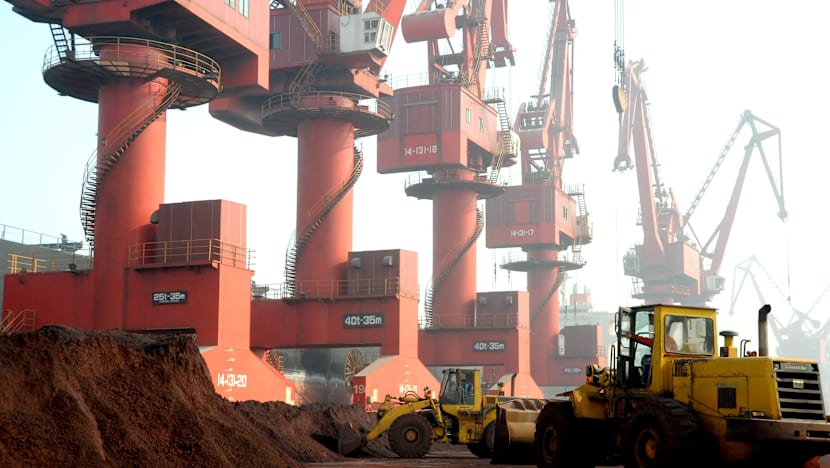
Workers transport soil containing rare earth elements for export at a port in Lianyungang, Jiangsu province on Oct 31, 2010. (File photo: Reuters/Stringer)

This audio is generated by an AI tool.


SHANGHAI: It was late 2024 when one of the world’s most important sources of heavy rare earths fell into turmoil.
In Myanmar’s northern war-torn Kachin state, where Chinese-linked operators and a junta-allied militia had long overseen mining of ionic clay ores, the Kachin Independence Army (KIA) reportedly seized control of key rare earth hubs.
As the group tightened its grip on licensing, taxation, and ore movement, mining slowed sharply.
For Beijing, the disruption cut deep.
The hills of Kachin supply the bulk of the dysprosium and terbium that China processes and exports globally - silvery white rare metals needed to produce high-performance magnets used in electric vehicles, wind turbines and advanced defence systems.
By early 2025, imports of rare earth compounds from Myanmar - which had accounted for more than half of °ä³Բ¹’s heavy rare earth feedstock and most of its import value - had plunged, according to Chinese customs data.
Prices for terbium and dysprosium spiked, and concern had spread among Chinese magnet makers and traders over how long the squeeze could last.
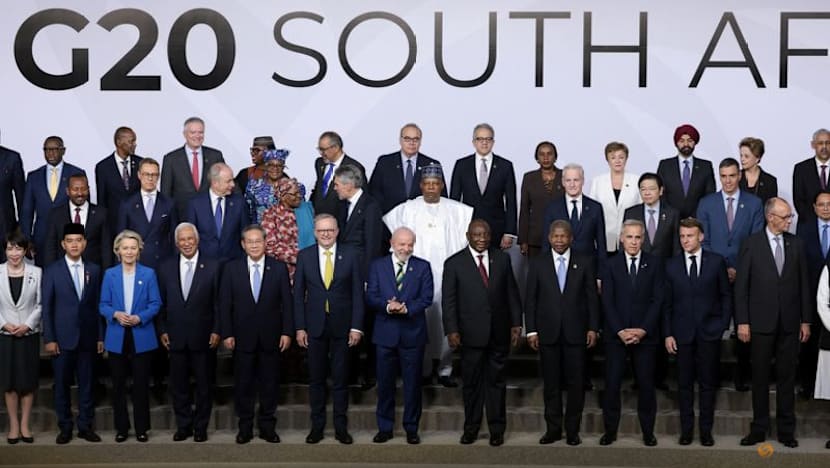
So when Chinese Premier Li Qiang launched a new “green minerals” alliance with developing nations at the recent G20 summit in Johannesburg, analysts said the move reflected a deeper strategic urgency.

The “International Economic and Trade Cooperation Initiative on Green Mining and Minerals” is billed as a framework to promote cleaner extraction, fairer distribution of mineral benefits, and more predictable supply chains - and also as °ä³Բ¹’s bid to shape emerging global standards for “green” critical minerals.
Early members of the alliance include 19 countries such as Cambodia, Nigeria, Myanmar, Zimbabwe, as well as the United Nations Industrial Development Organization (UNIDO).
Paul Triolo, a non-resident senior fellow at the Asia Society Policy Institute’s Center for China Analysis, said the initiative reflects Beijing’s desire to be viewed as a “responsible player” in global supply chains, rather than a coercive actor.
“China already holds significant advantages in these markets,” Triolo told Â鶹, adding that Beijing is working to strengthen Chinese companies’ positions and at the same time, signal to host governments that it had more to offer than the US and its allies.
In comments carried by Chinese state media outlets, Li said China would “better safeguard the interests of developing countries and promote mutually beneficial cooperation and peaceful use of key minerals”.
HOW RARE EARTHS BECAME GLOBAL LEVERAGE - AND CHINA’S NEW PLAYBOOK
Despite their name, rare earths - a group of 17 elements - are not actually rare. Most are abundant in nature, though extracting them can be hazardous.
They are essential for producing smartphones, EVs, wind turbines, jet engines, missiles, and data centres. Many possess fluorescent, magnetic, or superconductive properties and nearly all are notoriously difficult to refine.
Processing rare earths is also environmentally fraught.
The ores often contain radioactive byproducts such as thorium and uranium, requiring stringent safeguards that many jurisdictions struggle to enforce.
HOW RARE EARTH MINING WORKS
Rare earths aren’t hard to mine because they’re rare - they’re hard because they’re messy to handle.
The metals are usually spread out in tiny amounts across huge rock formations, so pulling them out is slow, chemical-heavy work.
Once the ore is dug up, it’s crushed, milled and run through multiple chemical steps.
One common method, solvent extraction, pushes the dissolved minerals through hundreds of liquid stages to separate each metal.
It’s a finicky process where even small shifts in acidity or temperature can throw everything off.
And then there’s the radioactive waste.
Because many rare earth ores contain thorium and uranium, processing them means leaving behind toxic byproducts which would need strict handling and long-term storage.
°ä³Բ¹’s dominance in the rare earth sector dates back to the 1980s, when the country began building what would become a near-monopoly in both rare earth extraction and crucially, refining - the intensive process that separates them from other minerals.
By 2024, China accounted for roughly 60 per cent of global rare earth mining production and 91 per cent of refining output, said the International Energy Agency (IEA).
A Reuters report published on Nov 19, citing Benchmark Mineral Intelligence, projected that Western markets would still depend on China for 91 per cent of their heavy rare earth supply by 2030.
Against this backdrop, °ä³Բ¹’s new mineral diplomacy takes on added significance, experts said.
“The primary aim is to ease the growing concern that some of its allies in the G20 framework were starting to have about the unilateral sort of actions by China to control the volume of critical minerals export,” said Jane Nakano, a senior fellow in the Energy Security and Climate Change Program at the Center for Strategic and International Studies (CSIS).
“It's to mitigate its critical mineral supply chain dominance from becoming sort of a liability in international relations,” Nakano said, adding that it’s so China would “not lose allies and partners”.
For instance, past reports pointed to 2023 Chinese export controls on metals like gallium and germanium as Beijing used critical mineral supplies as leverage.
Analysts and governments have flagged them as potentially disruptive to global supply chains for chips, optics, and other high-tech applications reliant on those elements.
Language used by °ä³Բ¹’s International Economic and Trade Cooperation Initiative on Green Mining and Minerals leans heavily on words like “open”, “fair”, “sustainable” and “inclusive”, analysts noted.
The framework promises green mining, R&D incubation platforms, and trade facilitation aligned with World Trade Organization (WTO) rules.
The message, analysts suggest, is that China seeks not to dominate global minerals through coercion, but through cooperation and shared standards.
Beijing is seeking to “dispel the sense” that it is weaponising the dominance of Chinese companies in critical mineral supply chains, said Triolo, especially as China tightens control over the rare earth sector amid trade tensions.
°ä³Բ¹’s strategy and approach is likely to resonate and “find sympathetic ears” with Global South partners, he said, pointing to the Belt and Road Initiative (BRI) as a key vehicle of influence.
“China is viewed as more sympathetic to the needs of developing countries, while suspicions of US motives remain high,” he said, also noting that Chinese firms had “already built substantial infrastructure”.
“Beijing wants to use the green minerals initiative to help solidify the ability of its companies to continue to have access to raw materials critical to key supply chains,” he added.
Nakano from CSIS echoed that assessment.
“China has every reason to want to extend its dominance of the global supply chain,” she said.
“But at the same time, in order to have more of a sustained presence, because they also want to probably reach many of these G20 and to some extent, BRICS markets … (that) are huge export destinations.”
“The initiative advances strategic objectives including de-risking green minerals’ supply chains through policy coordination … and more predictable investment protection,” said Xiong Lin, an associate professor at Xi’an Jiaotong-Liverpool University.
By working in concert with developing countries, China “positions itself as a cooperative provider of standards and technology within emerging green minerals governance”, she added.
The initiative’s incubation platforms and regional investment agreements, Xiong noted, could “institutionalise °ä³Բ¹’s influence progressively over time”.
Analysts said this amounts to building scaffolding around existing dominance - using multilateral language and green standards to soften a fundamentally asymmetrical system.
Another driver is °ä³Բ¹’s own supply insecurity.
The country is increasingly reliant on imported rare earth feedstock. According to Thomas Kruemmer, director of Singapore-based Ginger International Trade and Investment, imports now underpin “about one-third of (°ä³Բ¹’s) finished rare earth products”.
“China has much less rare earths available at the end of this year than they had at the beginning”, he said.
Timing also matters. The United States and its allies have been assembling their own coalition, the Minerals Security Partnership (MSP) which includes countries like Australia, Canada, Japan, South Korea and EU countries.
Launched in 2022, the MSP aims to help mineral-rich countries develop cleaner and more transparent mining sectors without locking them into a single buyer or processor.
“What’s fascinating is the messaging is very similar,” Nakano said of °ä³Բ¹’s initiative and the MSP.
“It’s about making it mutually beneficial … we are not there to take advantage … we’re aware of the mineral-rich developing countries’ desire to become part of this emerging clean tech supply chain.”
Triolo noted that while the initiative’s near-term impact on global supply chain diversification may be limited, it plays a strategic role in securing long-term access.
“The US and allied efforts to secure access to raw materials already face major challenges,” he said, citing the time it takes to gain approvals for mining, ramp up personnel training, and achieve some economies of scale required to compete internationally.
“Beijing’s new effort in the short term is not likely to be a significant challenge to US and allied efforts, given that Chinese firms already dominate most supply chains for critical minerals.”
Technology transfer also remains a sticking point. While many countries hope to refine rare earths domestically, China guards its separation technology closely.
“M²¹±ô²¹²â²õ¾±²¹ wants the added value to occur in Malaysia,” said Kruemmer. “China says: you’re welcome to ship your ore to China, but we won’t give you the technology.”
Indeed, China retains powerful leverage. Countries such as Myanmar, Laos and Malaysia depend heavily on Chinese inputs, including specialised mining chemicals. “Without Chinese supplies, this would be really difficult,” Kruemmer said.

CRITICAL MINERALS AT A CROSSROADS
At the recent G20 summit, the final declaration made a seemingly veiled reference to China, criticising “unilateral trade actions” that threatened to disrupt global critical mineral flows - a line alluding to Beijing’s broad export restrictions introduced during the Trump 2.0 trade tensions.
European leaders have also expressed concern over Beijing’s new export controls on minerals with potential military applications.
In an address to the European Parliament on Nov 25, EU industry commissioner Stephane Sejourne sharpened that warning, telling lawmakers it was “time for Europe to step up its game”.
Sejourne also urged the bloc to “redouble its efforts” to reduce dependence on China and said rare earth export curbs by Beijing earlier in April also “directly targeted” Europe. He described limited access to such minerals as “alarming”, even after China announced a temporary suspension of some restrictions.
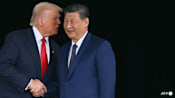
Tensions have since eased slightly. When US President Donald Trump and Chinese President Xi Jinping met in South Korea on Oct 30, China agreed to pause its rare earth export controls for a year, according to a statement from the Chinese commerce ministry.
Separately, others expressed optimism about Beijing’s broader diplomatic outreach.
Irish Prime Minister Micheal Martin, struck a hopeful note, welcoming the cooperative tone of °ä³Բ¹’s new initiative. “I would hope that because of these meetings and gatherings, we can avoid such situations happening in the future and have genuine access to rare earth minerals,” he said.
Other leaders made clear that access alone was no longer enough.
Brazilian President Luiz Inacio Lula da Silva emphasised that Brazil does not intend to remain merely a supplier of raw materials.
“We won’t be just exporters but partners in the global value chain for critical minerals,” he said in a speech.
This is the core dynamic reshaping the landscape: countries like Nigeria, South Africa, Myanmar, and Zimbabwe are being courted simultaneously by Beijing and Washington.
Nakano sees upside. “These countries likely enjoy both the United States and China coming to them,” she said. “That gives them leverage to be able to get much better terms.”
Xiong agrees, noting that the initiative offers “access to green-mining standards, community benefit-sharing frameworks, and integration into higher-value segments”.
The framework also aligns well with Africa’s industrialisation and beneficiation strategies, she said.

Experts warn that without enforceable safeguards, significant infrastructure investment, and meaningful skills transfer, resource-rich countries could once again find themselves exporting raw materials while importing finished goods - an old pattern with new geopolitical branding.
For now, much of the initiative remains aspirational, experts said, adding it lacks detailed project timelines, investment commitments, or funding figures.
°ä³Բ¹’s structural advantage - such as scale, cost efficiency, and market power - remains largely intact.
“The pricing power in rare earths has always (rested solely with) China,” said Kruemmer. “Foreign miners … refer to the Chinese price for setting the price.”
Xiong added that while the initiative may ultimately broaden mining and processing across partner countries, it would do so using “Chinese technology and equipment … integrated through shared standards and capabilities”.
That effectively gives China normative power - the ability to set rules others must follow, she said.
If participating nations adopt Chinese-aligned green standards, it could create a “demand pull” for minerals processed through Chinese-compatible methods, she added.
At the same time, Triolo said it remains unclear how the initiative will affect °ä³Բ¹’s long-term dominance in refining and high-value processing.
“It is likely to help ensure that Chinese firms continue to have access to raw materials,” he said.
“Beijing can offer other benefits to countries that align on these issues, including favourable financing for infrastructure expansion.”
In the short term, however, the impact will be limited.
“Very little will change in three to five years,” Kruemmer said, adding that “ramping up mining takes years”.
“If China succeeds in addressing the economies that are starting to grow a bit uncomfortable with °ä³Բ¹’s dominance - including African nations who want to avoid exploitative relationships - then China will likely succeed in extending its dominance,” said Nakano.
For resource-rich countries, much hinges on who can offer stability and long-term demand.
“China is not a country that these resource-rich countries can ignore because of its huge appetite for these minerals,” Nakano said.
“If China really meant what it meant at G20, they're in for a lot of the hard work … and it doesn't happen overnight.”