China shoots for the stars with big bet on commercial space sector
The Chinese commercial space market is expected to exceed 2.5 trillion yuan (US$350 billion) in 2025, with Beijing positioning the industry as a key engine for future economic growth and global competitiveness.

This audio is generated by an AI tool.




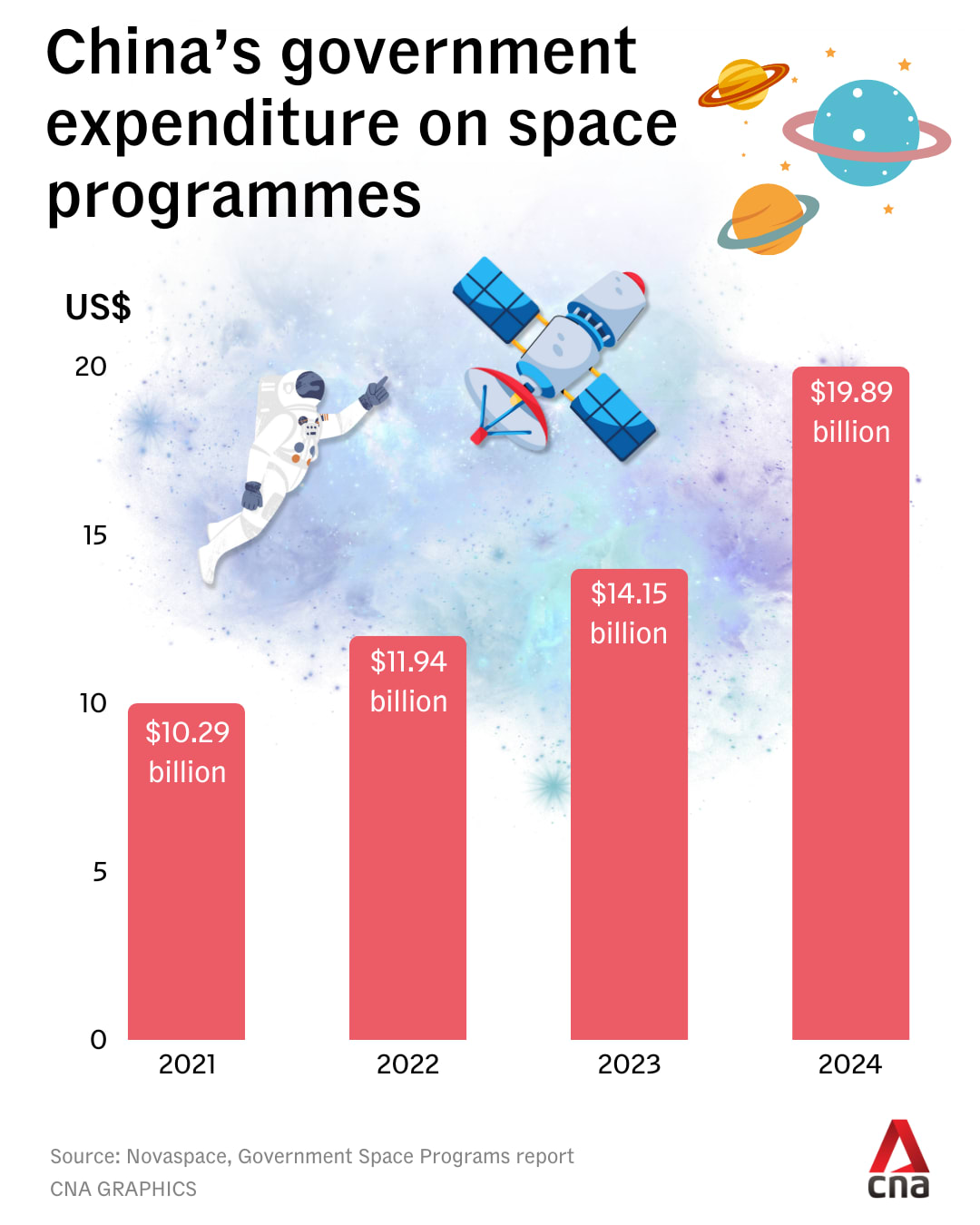
SHENZHEN: China is pushing harder than ever for science and technology independence in its next Five-Year Plan until 2030, placing particular emphasis on accelerating its space ambitions.
The momentum comes as Beijing positions the space industry as a core driver of future economic growth and global competitiveness.
Last year, the Chinese government officially named the commercial space sector as a new engine of growth, signalling that the authorities will support it with policy.
On Saturday (Nov 29), the China National Space Administration (CNSA) announced that it recently set up a new department dedicated to overseeing the commercial space sector.
The country's national space agency said the move will pave the way for specialised regulation for the industry and promote high quality development across the entire industrial chain.
PRIVATE FIRMS MAKING HEADWAY
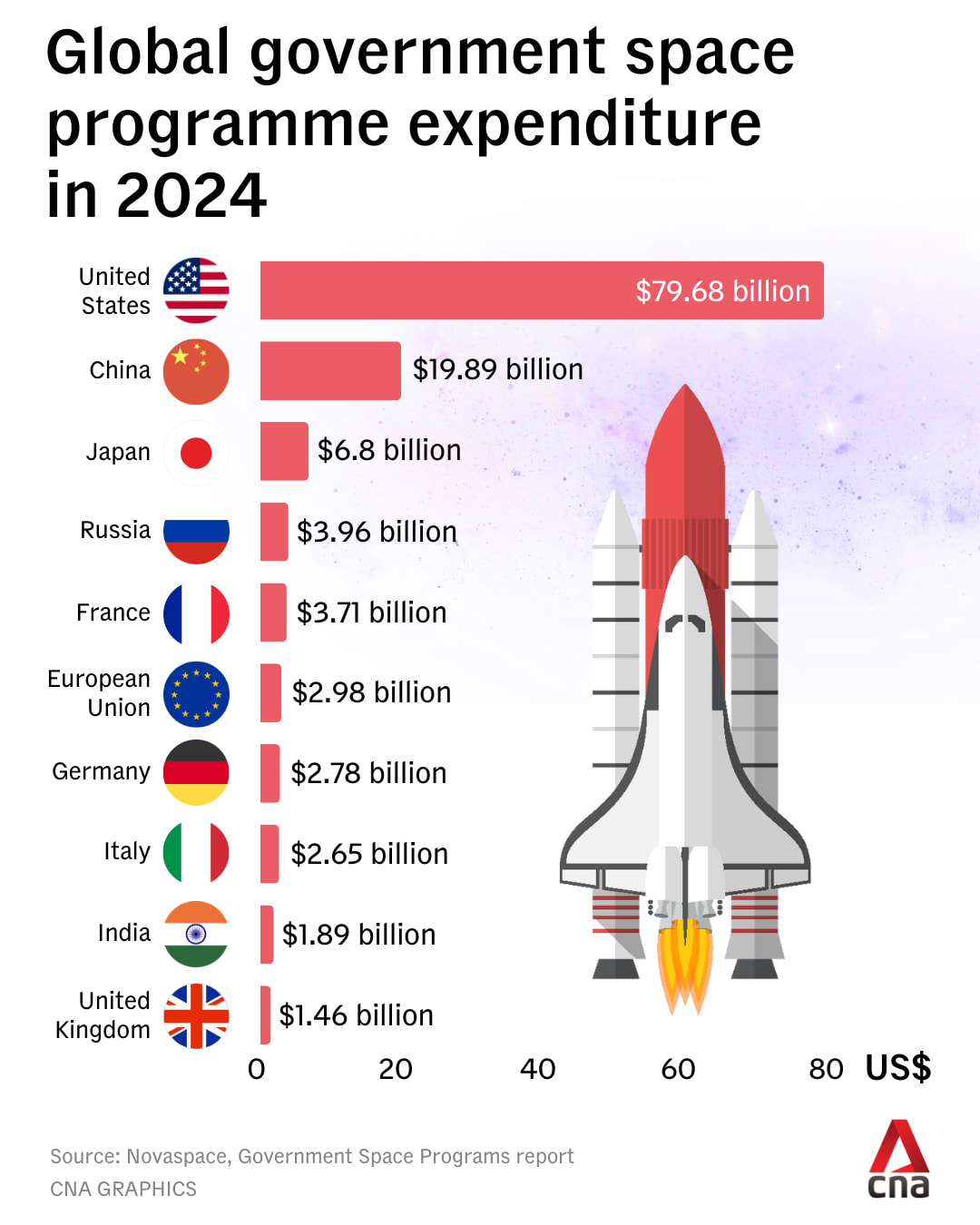
Once dominated by state-owned enterprises, the sector is now buzzing with private companies fuelled by government backing, with the goal of advancing China's space capabilities within this decade and closing the gap with the United States.
This shift was on full display at the China Hi-Tech Fair held in Shenzhen from Nov 14 to 16, where commercial space companies showcased new technologies and business models.
Among them was Beijing-based start-up Skysight Technology, which specialises in remote-sensing data.
Its deputy general manager Liu Yuting told Â鶹 that over the past two years, more firms have started recognising and integrating satellite technology into their production and operational processes.
“From a national perspective, various ministries and commissions, along with supportive policies and official guidelines, have actively encouraged enterprises to leverage these advanced technologies,” she noted.
“Furthermore, financial incentives and funding support have been provided to facilitate the application of such technologies in emerging industrial domains.”
There are currently more than 600 commercial space firms in China, with the sector’s market size expected to exceed 2.5 trillion yuan (US$350 billion) this year.
SPACE TOURISM
Space tourism remains the next frontier, and China had announced plans to debut its space tourism project at the China Hi-Tech Fair.
But that never took off, with no official explanation given.
Still, optimism within the sector remains strong
“The development of commercial space in China today, as well as humanity’s future exploration of space resources and space itself globally, shows that space travel and spacecraft have tremendous potential,” said Liu Tianxiao, board secretary of Shaanxi Space Circling Technology, which develops rocket engines for commercial launches.
“This inevitably requires a high-performance, cost-effective, and reusable rocket … Only with such a rocket can we better support the development of the commercial future of space travel,” he added.
Another player, Cangyu Space Technology – which also has partners in Southeast Asia – is developing a satellite network to improve tracing data.
Tracking, control and data transmission problems have long challenged the space tourism industry, said Cangyu Space senior vice president Shen Shijun.
He pointed out that as a spacecraft orbits the Earth, it can only be controlled by the ground station for 5 to 10 minutes.
“(This) is very risky … But the coverage area by the commercial sector will in future be able to connect three satellites to achieve 100 per cent global, round-the-clock, all-weather coverage,” he said.
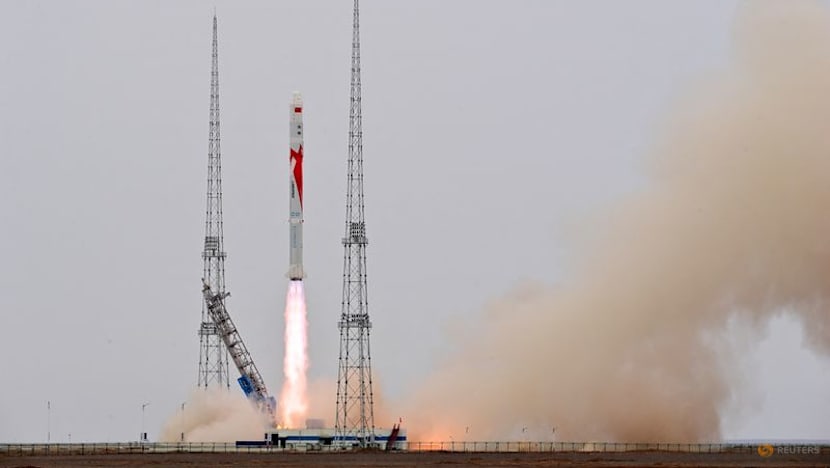
Meanwhile Chinese start-up LandSpace has plans to launch its first reusable rocket, which could bring down the cost of launching satellites and various types of spacecraft.
The maiden launch which was originally scheduled on Nov 29, has been temporarily postponed due to "force majeure".
The tech, which was pioneered by US-based SpaceX, drew comment from SpaceX CEO and billionaire Elon Musk in October.
In a social media post, he said several Chinese reusable carrier rockets had “added aspects of Starship” – SpaceX’s most powerful launch vehicle – to a “Falcon 9 architecture”, in reference to one of SpaceX’s earlier reusable rockets.
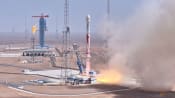
He had commented on a video clip showing the fuelling rehearsal and static ignition test of Landspace’s Zhuque-3 reusable rocket.
LOOKING FURTHER
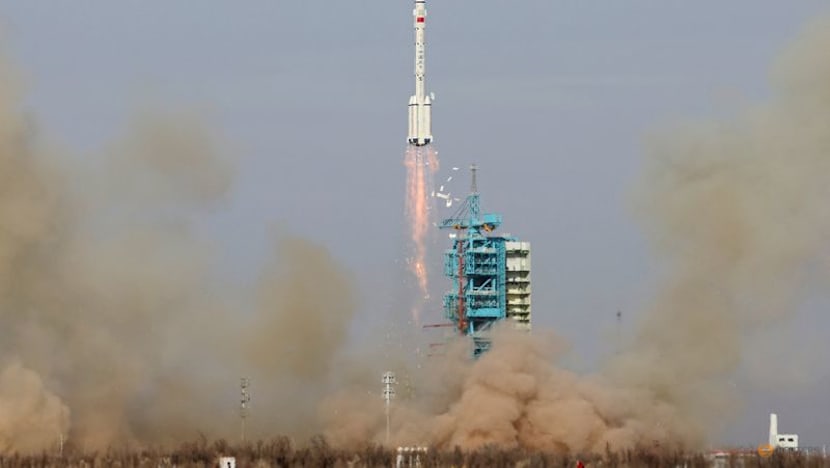
China’s space sector has made significant strides in the public, state-led domain as well.
Last year, its Chang’e mission brought back samples from the far side of the moon.
In 2022, it launched Tiangong - one of two fully operational space stations in the world. Astronauts aboard the station recently used a smokeless oven to barbeque chicken wings for the first time ever.
Last week, China completed its first emergency space launch to Tiangong after a vessel was damaged in orbit earlier this month.
But the world’s second-largest economy has set its sights even further.
“The priority for China is to go all in on a technology-based, technology-driven economy,” said Alejandro Reyes, a senior fellow at the University of Hong Kong’s Centre on Contemporary China and the World.
“(This is) because, frankly, the biggest priority is trying to deal with that demographic time-bomb of an eventually declining population. And the only way China can really deal with that is through enhancing its productivity,” he added.

ATTRACTING TALENT
Two of China’s Tier 1 cities, Beijing and Shanghai, have also sped up investments in the space industry.
Career fairs have been held there and in the two other Chinese top-tier cities – Guangzhou and Shenzhen.
China has made high-skilled recruitment a priority in its next Five-Year Plan. In October, it rolled out a new K visa to attract foreign science and tech talent, marking a sharp contrast to tighter visa controls in the US.
At a recent career fair in Shenzhen, some international students told Â鶹 they are hopeful about their prospects in China.
“It's very hard to find mega companies in Morocco or the Middle East, so it's better, for example, when I come to Manulife, Huawei or Oppo – it's better to work for them in the headquarters in China,” said Tsinghua University undergraduate El Akkad Sami, who studies artificial intelligence.
“And then, if you want to go back, it's better to go back with the experience you took from all the years you spent in China.”
Computer science and engineering student Venkata Yashwant Kumar Bhyri, who studies at the Chinese University of Hong Kong, Shenzhen, said major tech companies like Tencent and Nothing have visited his campus several times for recruitment.
“I've been passing out my resumes, and I hope to get some interview calls,” he added.