HDB to design playgrounds under new framework to support children’s ‘holistic development’
The framework encourages "physical, social and creative play", and incorporates input from parents and early childhood and healthcare professionals.
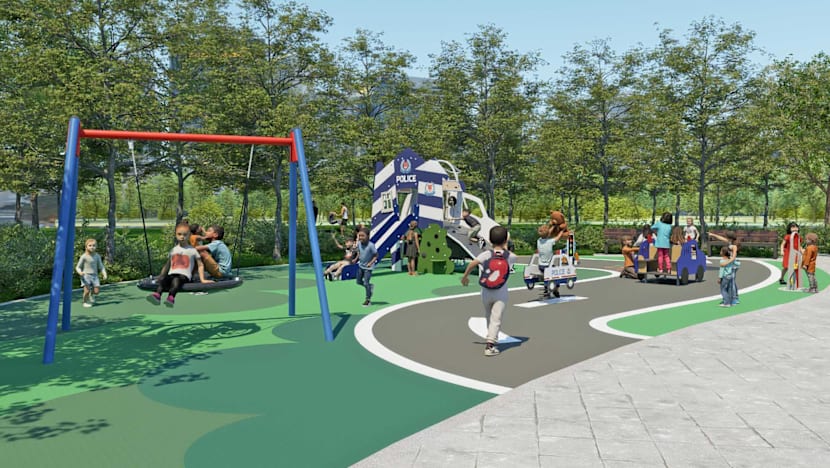
An illustration of a playground designed for Mount Pleasant Crest. (Image: HDB)

This audio is generated by an AI tool.
SINGAPORE: From next year, new playgrounds built by the Housing and Development Board (HDB) will follow a new framework to provide more engaging and diverse play experiences for children.
"New HDB playgrounds will be specifically designed to encourage physical, social, and creative play, to actively support the holistic development of children across different age groups," said HDB in a media release on Wednesday (Dec 3).
The framework will be introduced from January 2026 for playgrounds in newly tendered Build-To-Order (BTO) developments and new HDB parks. It was piloted at Mount Pleasant Crest, a BTO project launched in October 2025.
The new Play Values Framework was shaped with input from stakeholders, including parents, early childhood and health professionals and playground specialists, HDB said.
It “adopts an evidence-based and comprehensive approach to enhance the play experience for children, while addressing their developmental needs", the Housing Board added.
Listen:
THE FRAMEWORK
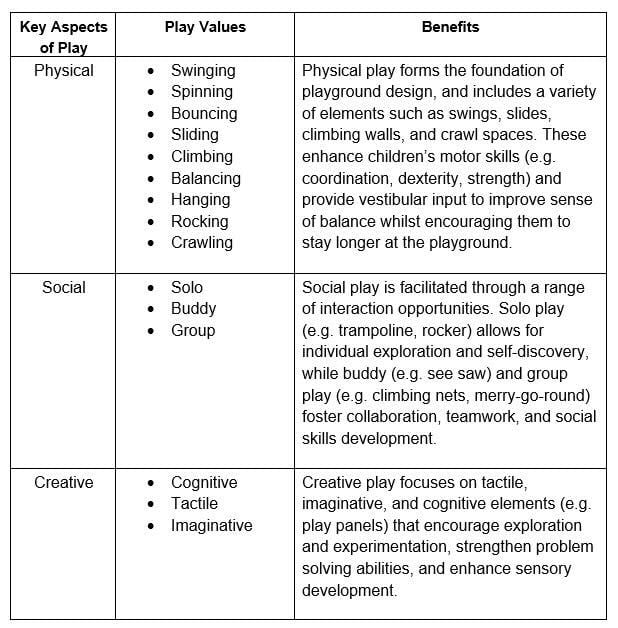
The new framework emphasises three key aspects of play - physical, social, and creative - each with its own set of elements to create fun and engaging playgrounds, said HDB.
At the same time, these will be balanced with considerations such as safety, age-appropriateness and space availability.
Swings, slides and climbing walls are among the physical components of the Play Values Framework. These elements enhance a child’s motor skills and improve their sense of balance.
Meanwhile, the aspect of social play involves structures like see-saws or merry-go-rounds that can fashion a range of interaction opportunities at the playground.
The creative aspect of the framework focuses on tactile, imaginative and cognitive elements that encourage exploration and experimentation, strengthen problem-solving abilities and enhance sensory development, said HDB.
“Under this framework, playground equipment can take diverse forms beyond conventional designs, to offer varied experiences and challenges.”
CATERING TO DIFFERENT AGE GROUPS
The new framework will also guide age-appropriate playground designs for the different developmental stages of children.
“In addition to physical play options, playgrounds for younger children aged two to five will prioritise creative and imaginative play, which is crucial for their development,” said HDB.
“This could include thematic designs with open-ended play features such as nature-inspired shapes, mounds and bright floor patterns.”
For older children aged five to 12, greater emphasis will be placed on physical and group play, it said.
All playgrounds will offer elements that develop fundamental movement skills like climbing and balancing, alongside a mix of other physical activities such as swinging, spinning, and bouncing.
“These elements balance adventure with safety to provide age-appropriate challenges,” said HDB.
Larger playgrounds in parks could also accommodate additional equipment such as merry-go-rounds and spinners where space permits, it added.
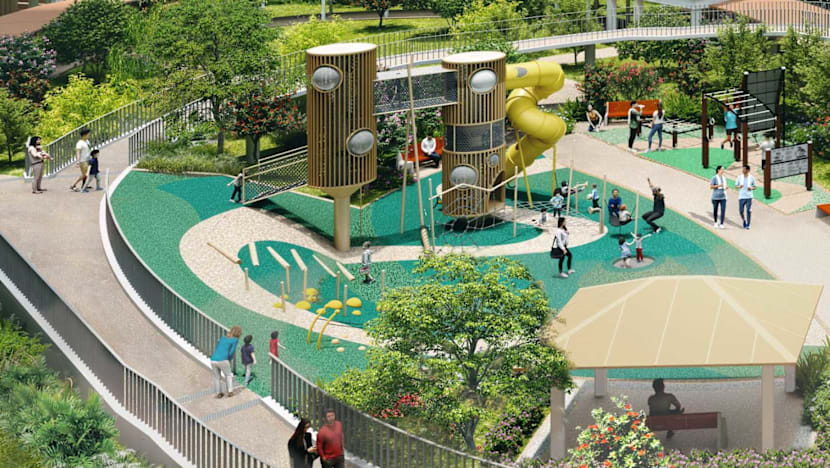
"HDB strives to create playgrounds that are vibrant, fun, and safe for our young residents," said Mr Leonard Cai, director of landscape at HDB.
“This framework will ensure that our playgrounds offer a wider range of play features to support children’s holistic development, enhancing play experiences to spark children’s imagination and create joyful childhood memories."
The framework will also be extended to town councils, which maintain and facilitate cyclical playground upgrades in HDB estates, HDB said.
This is so that playgrounds in existing precincts and parks can provide more varied and engaging play, it said.
"HDB residents can look forward to having more playgrounds that help promote imaginative play and support the holistic development of children."
In response to Â鶹's queries, HDB said that the new playgrounds are not expected to cost more.
Factors that determine the cost include the type of play equipment chosen, the size of the playground and the terrain on the site, which can differ.
"Contractors will be able to choose the equipment from a range of manufacturers in the market," HDB added.
The development of the Play Values Framework involved HDB inviting stakeholders to share views and insights, at no cost, said the Housing Board.
EVOLUTION OF HDB PLAYGROUNDS
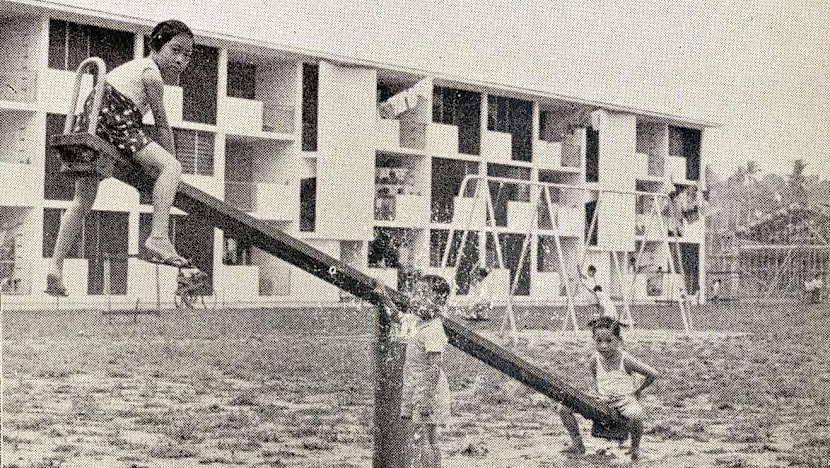
HDB noted that its playgrounds had undergone significant evolution in design, form and functions over the decades.
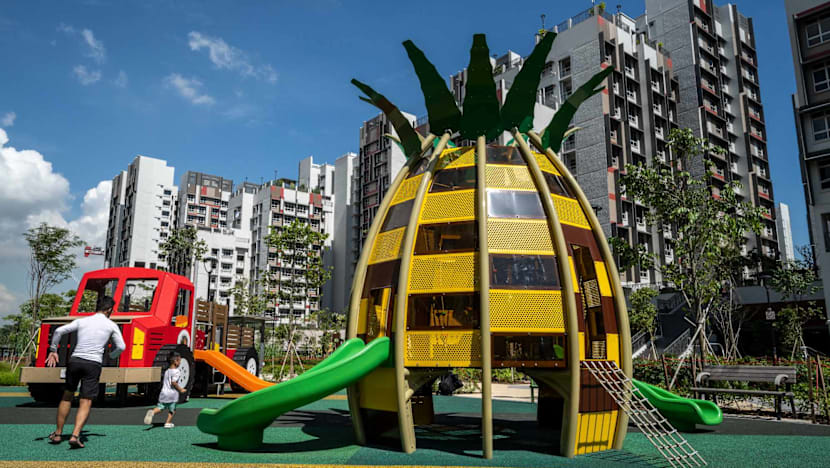
While playgrounds in the 1960s had simple slides, swings and see-saws, the spaces took on more creative forms in the 1970s and 1980s, with playgrounds shaped like dragons, animals and fruits.
By the 1990s, they combined multiple play elements, such as slides, bridges, climbing structures and play panels, to cater to different age groups and encourage more interaction between children and families.
In the 2000s, HDB introduced "3G playgrounds", which combined play and fitness areas.
Since 2015, new housing projects have featured thematic playgrounds which incorporate elements of the area’s heritage and history.
HDB also launched the Build-a-Playground initiative, inviting residents to co-create play spaces in Canberra, Toa Payoh, Woodlands, and Pasir Ris.