




Singapore advances nuclear power studies, boosts manpower amid safety and public confidence concerns
Advances in nuclear technology, particularly compact reactors, have made atomic energy a more feasible option for land-scarce Singapore.
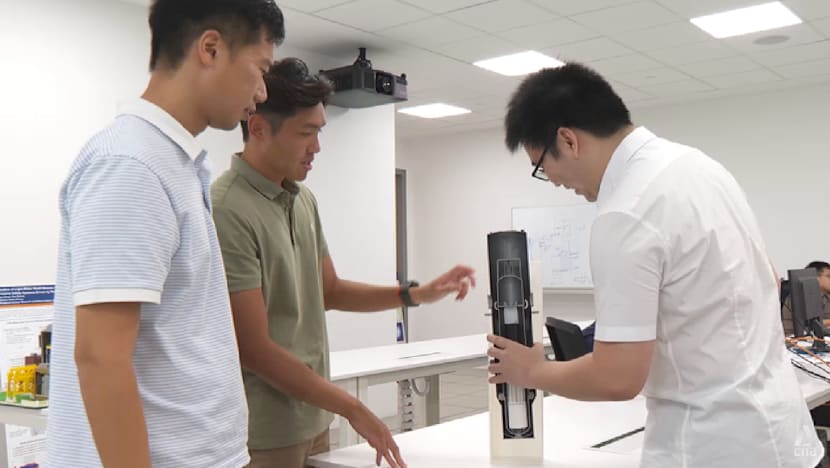
Advances in nuclear technology, particularly compact reactors, have made atomic energy a more feasible option for land-scarce Singapore.

This audio is generated by an AI tool.




SINGAPORE: Singapore is building its manpower pool and ramping up research as it explores whether nuclear energy could one day power the nation.
While there is still no official timeline, authorities say rigorous safety standards and public confidence will be key hurdles, even as regional interest in nuclear energy gathers pace.
“Nuclear energy is an emotive subject, so we have to take into consideration the public's understanding and the confidence in the technologies that will be deployed,” said Mr Chia Meng Hwee, deputy director of the Energy Market Authority’s (EMA) Nuclear Energy Office.
“Successful deployment of nuclear energy in the region could also boost public confidence in these technologies themselves. Conversely, if there's any setback in terms of deployment, this could also negatively impact the local and regional perception of these technologies.”
Singapore will continue engaging the public to deepen understanding of its energy challenges and the facts around nuclear power, the national energy regulator said.
CONTROVERSIAL SOURCE OF ENERGY
About 95 per cent of Singapore's electricity is generated from natural gas – a heavy reliance that leaves the country vulnerable to global price swings and supply chain shocks.
With rising energy demand, limited land and growing climate pressures, observers told Â鶹 that the push for cleaner and more reliable alternatives has intensified.
Yet, conventional solutions do not always fit Singapore’s constraints, they said, adding that the country must think smaller and smarter.
Against this backdrop, the EMA has appointed consultancy firm Mott MacDonald to study nuclear energy technologies.
Advances in nuclear technology, particularly compact reactors, have made atomic energy a more feasible option for land-scarce Singapore.
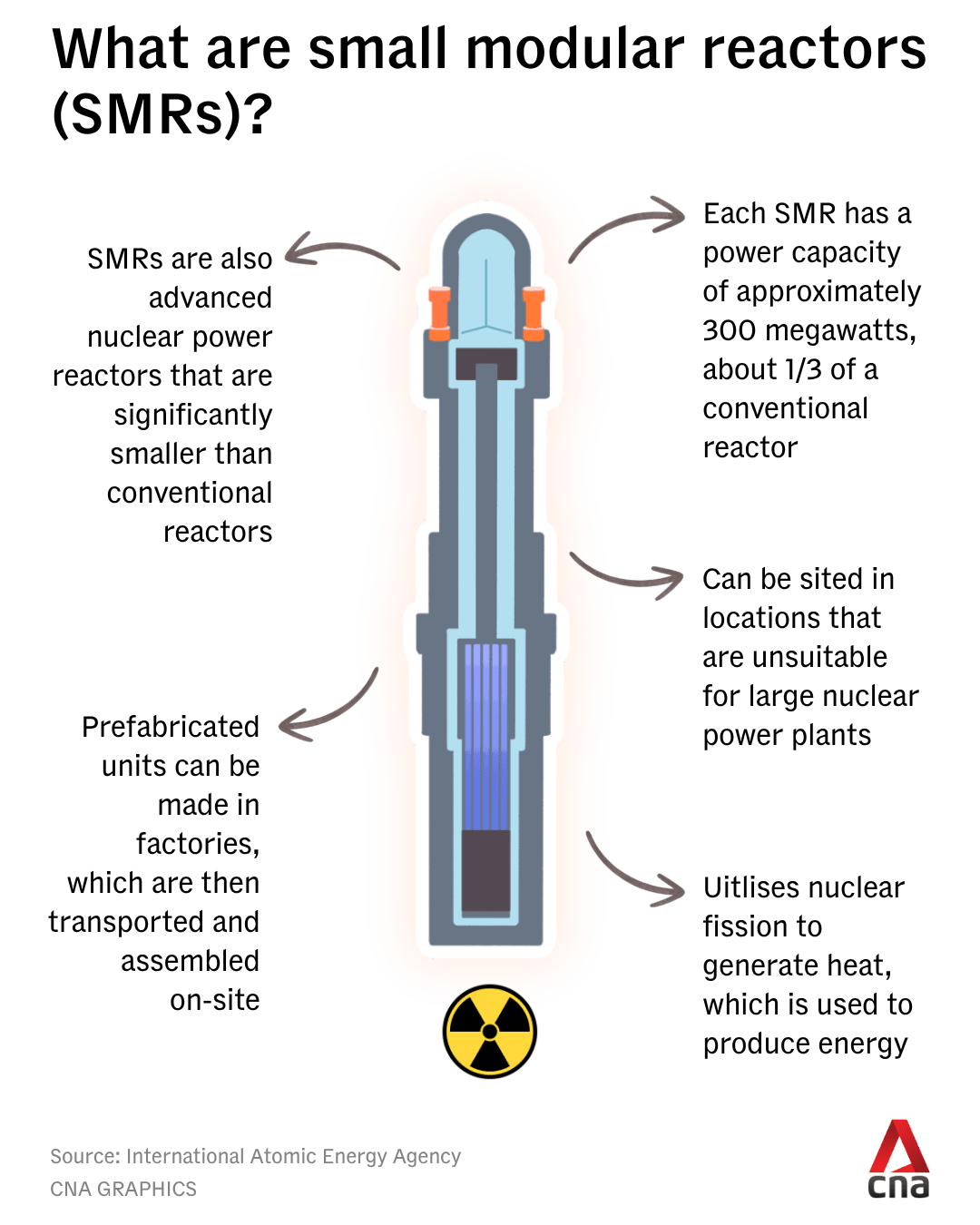
Small modular nuclear reactors (SMRs) are a next-generation technology designed to be simpler, as well as potentially faster and more cost-effective to build than traditional large-scale reactors.
By contrast, conventional reactors are enormous and can take close to a decade to construct.
SMRs are already operating in Russia and China, with projects advancing in the United States, Canada and the United Kingdom.
For Singapore, these reactors could offer distinct advantages.
They require less land and are easier to scale, with prefabricated modules that can be shipped and assembled on site – cutting construction time and costs.
Their output is about a third the generating capacity of conventional reactors, or around 300 megawatts per unit.
ADDRESSING SAFETY CONCERNS
SMRs also use passive safety systems that can shut down and cool the reactor without pumps or human intervention.
“For us, safety is absolutely non-negotiable,” said Dr Ming Tan, global nuclear practice lead at Mott MacDonald.
“Therefore, we'll be focusing on the key safety and design advancements in SMRs, such as the inherent safety features and their simpler, more compact plant design,” he added.
“We're also looking at the progress these technologies have made through its licensing and regulatory processes. So really, while SMRs are looking promising, our focus is on translating these advances into a strong evidence-based understanding for Singapore.”
Testing air, land and water samples is part of Singapore’s national radiation monitoring programme.
Across the island, a network of stations continuously monitors the air for anomalies, allowing officers to quickly detect spikes that could indicate nuclear radiation.
Soil and water samples are also tested for radioactivity at levels that could pose risks to human health.

REGIONAL AMBITIONS
But the programme does not only benefit Singapore – it also improves detection capabilities as nuclear energy is deployed in the region.
Some countries like the Philippines and Indonesia are already taking preparatory steps towards operating nuclear power plants.
“We are catalysing nuclear safety cooperation among our counterpart regulators in the region,” said Mr Ang Kok Kiat, group director for radiation protection and nuclear science at the National Environment Agency.
This builds on the strong collaboration within the Association of Southeast Asian Nations (ASEAN), which has already produced concrete outcomes such as regional early warning systems, he added.
“This collaborative approach ensures that countries in Southeast Asia are better prepared as interest in nuclear energy deployment continues to grow.”
The Singapore Nuclear Research and Safety Institute – which brings together expertise in nuclear technology and safety, and helps build a pool of specialists to support nuclear-related needs – said the country should quickly adopt a new reactor when it has been sufficiently tested.
Its director, Associate Professor Chung Keng Yeow, said: “All the preparation work, especially for the institute, building up manpower, sending people on scholarships overseas – so that we start to build at least some human expertise in this area – is already indicating some sort of a start.”


