IN FOCUS: What are the dynamics in Malaysia’s opposition pact PN 3 years into PM Anwar’s term?
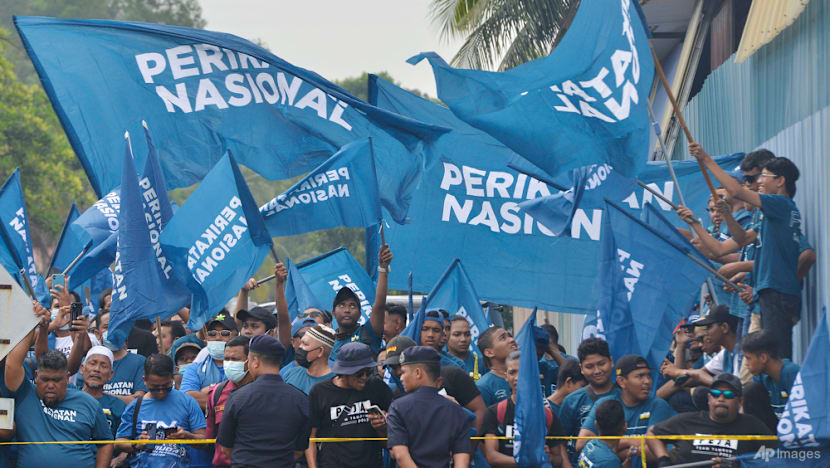
With crucial state polls preceding Malaysia’s 16th General Election due by early 2028, Perikatan Nasional's path forward hinges on solving Bersatu’s leadership crisis and getting more non-Malay support, say party insiders and analysts.

This audio is generated by an AI tool.


KUALA LUMPUR: The recent Sabah state election has made clear that Malaysian Prime Minister Anwar Ibrahim and his unity government must reset federal-state relations amid a wave of support for Sabah-rooted parties and the sentiment that the East Malaysian state has been shortchanged by the central government, analysts have said.
Amid speculation that Anwar could call the next general election (GE) – due by February 2028 – as early as the end of next year, equally important are the Sabah results’ implications for, and the readiness of Malaysia’s opposition Perikatan Nasional (PN) coalition.
PN’s main components are Parti Pribumi Bersatu Malaysia (Bersatu) and Parti Islam Se-Malaysia (PAS).
While all peninsular Malaysia-based coalitions, including Anwar’s Pakatan Harapan (PH) and Barisan Nasional (BN), performed poorly in the Nov 29 Sabah polls amid rising “Sabah first” sentiments, PN's overall results were widely considered to be the most disastrous.
PN won only one seat out of 42 contested, down from the 17 it secured through contests in 29 seats in 2020’s election.
By comparison, PH won one seat out of 22 it contested in Sabah, down from eight out of 15 in the previous election.
BN won six out of the 45 seats it contested this time round, less than the 14 it had secured out of 33 contests in 2020.
The seat PN did win marked a historic breakthrough for PAS, which secured its first-ever elected seat in the state.
Aliakbar Gulasan, an academic, won in the 11-way fight for the Karambunai seat. The milestone was immediately celebrated by PAS leaders, who lauded it as the Islamist party's "firstborn child" in Sabah, signalling its entry into Bornean politics.
His victory represented the sole positive outcome for PN, but piled on the woes for Bersatu, which has been beset with internal fighting and a leadership crisis in recent months.
With the current 15th parliament marking three years since it first sat on Dec 19, 2022, attention is shifting towards upcoming polls in other states as the clock ticks towards the next GE.
While the Sabah results are not a comprehensive barometer of PN’s strength, analysts say Malaysia’s main opposition coalition must urgently address the conflicts within Bersatu before the next state polls in Melaka, Johor and Sarawak, as well as the next GE.
The Melaka state election must be held by February 2027, the Sarawak polls by April 2027, and the Johor polls by June 2027.
As for PH’s unity government partner BN - led by Deputy Prime Minister Ahmad Zahid Hamidi - observers believe its electoral pact with PH will continue, at least until the next GE, which must be held within 60 days of the end of the parliament’s five-year term in December 2027.
BERSATU CAUSING “RUCKUS” IN PN
Bersatu’s internal rifts, which have increasingly played out in the public domain, have centred on whether 78-year-old former Prime Minister Muhyiddin Yassin should hand over the reins as Bersatu president and remain PN’s prime ministerial candidate in GE16.
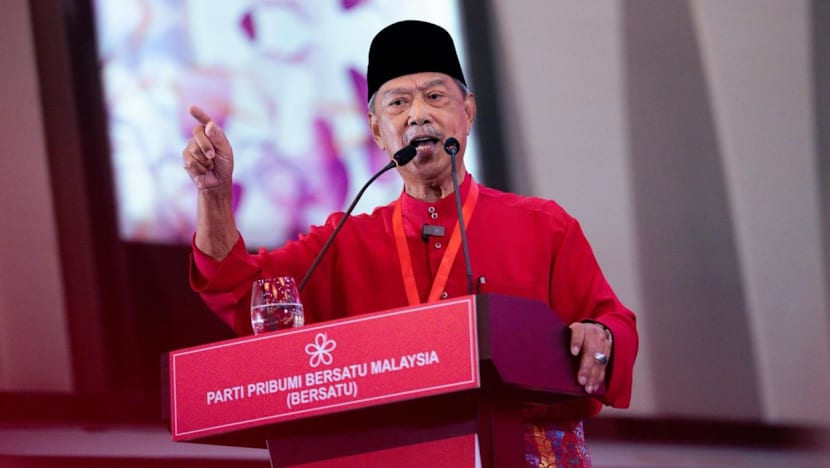
Despite PAS being the one driving recent electoral gains for PN, the coalition’s prime ministerial candidate will most likely come from Bersatu, which provides the coalition's secular-nationalist bridge.
But PAS has openly expressed its reluctance to support Muhyiddin as the PM candidate. This is in addition to factions within Bersatu that want deputy president Hamzah Zainudin to replace Muhyiddin.
PN parliamentary chief whip and PAS secretary-general Takiyuddin Hassan stressed the importance of Bersatu resolving its internal matter quickly, as it affects the entire coalition.
“It definitely will affect us because the president of Bersatu is our (PN) chairman. We have given them our view that the issues must be resolved as soon as possible, because people are viewing us (PN) as an alternative,” he said when Â鶹 approached him at parliament before the Sabah polls.
Political scientist Syaza Shukri of the International Islamic University Malaysia (IIUM) concurred. Bersatu’s internal problems pose the biggest challenge to PN ahead of GE16, she said.
“There’s a lot of uncertainty when it comes to Bersatu, and this affects PN. PAS is fine and ready. But their partner is the one causing this ruckus. Until Bersatu can put its house in order, PN looks incoherent,” she told Â鶹.


PN was formed in February 2020 and is currently made up of four component parties: Bersatu, PAS, Parti Gerakan Rakyat Malaysia and the Malaysian Indian People’s Party (MIPP).
The latter two are largely considered to be minor players in the coalition.
PN enjoyed surprise success in the 2022 GE that was characterised by the "Green Wave" featuring significant electoral gains largely propelled by PAS.
PN won 74 seats in the 222-seat parliament, establishing itself as the second-largest bloc behind PH, which won 82 seats.
PAS was the driving force behind PN's success, securing 43 parliamentary seats — a substantial gain of 25 seats — while Bersatu secured 31 seats, representing a gain of 17 seats.
PN's success came largely at the expense of BN, which won just 30 seats.
However, Bersatu’s share of seats has since dropped to 25, after six members of parliament (MPs) unhappy with Muhyiddin’s leadership switched allegiance to Anwar’s government in 2023.
Anwar was sworn in as prime minister on Nov 24, 2022, after the election failed to produce a clear winner and resulted in a hung parliament. He leads a unity government comprising PH, BN, Gabungan Parti Sarawak (GPS), Gabungan Rakyat Sabah (GRS) and Parti Warisan, among others.

Despite not forming the federal government, PN’s momentum continued at the state polls in August 2023 when it won the states of Kelantan, Terengganu and Kedah comfortably, while making significant gains in Penang, Negeri Sembilan and Selangor.
PN markedly improved on its margin in Penang with 11 seats, up from one previously, while increasing its seats from five to 22 in Selangor, preventing the PH-BN coalition from achieving a two-thirds majority.
PN also went from zero seats to five in Negeri Sembilan.
PN currently governs four states, all of which have chief ministers from PAS.
PAS is now eyeing victories in the states of Selangor, Perak and Pahang when the next round of state polls are called.
PAS information chief Ahmad Fadhli Shaari told Â鶹 that the party is always ready for the next GE, believing that it could be held as early as the end of 2026.
“We are ready for polls anytime and expect them to be held within 14 months - either late next year or early 2027, because the Democratic Action Party (DAP, which is part of PH) suggested that all the parliament polls and state polls be held at the same time,” said the Pasir Mas MP.
Historically, Malaysian state elections were held concurrently with the federal GE, with Sarawak being the long-standing exception.
However, since 2020, an increasing number of state legislatures have opted for unsynced dissolutions, leading to staggered state polls.
Only Perlis, Perak and Pahang conducted their polls simultaneously with the 2022 GE.
DAP secretary-general Anthony Loke has said the party supported holding simultaneous federal and state elections, citing it as a step to enhance efficiency and reduce election management costs.


OPPOSING BERSATU CAMPS TRADE BLAME FOR SABAH FAILINGS
The prevailing sentiment among the opposition is that Anwar’s unity government is vulnerable, with opposition leaders claiming his administration is underperforming and ready to be unseated.
They have cited reasons including the high cost of living, economic stagnation, Malaysia’s “unfair” trade deal with the United States, and ongoing corruption scandals.
But PN's euphoria following its historic gains in the 2022 GE and 2023 state polls has rapidly diminished, overshadowed by public displays of Bersatu infighting and friction between coalition members.
Tasek Gelugor MP Wan Saiful Wan Jan, who was expelled in October from Bersatu for “disciplinary breaches”, told Â鶹 that while PN still possesses strength and support, Bersatu is in need of self-correction.
“During this non-election year, this is a time when any party will try to make corrections to whatever weaknesses they feel they have,” said Wan Saiful, who has appealed against his sacking.
“The reason why there's turbulence now is because the party wants to fix itself in order to prepare to make a better offer (to) the people,” he added.
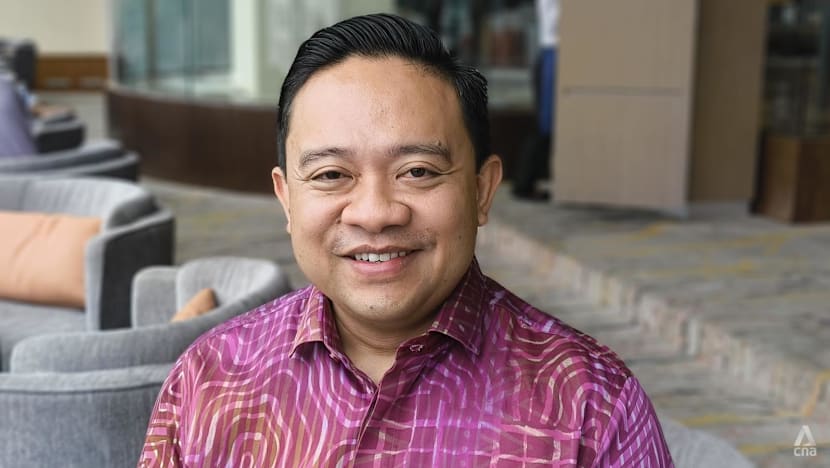
Besides Wan Saiful’s sacking, Machang MP Wan Ahmad Fayhsal Wan Ahmad Kamal was suspended for one term and several other Bersatu members were also expelled from the party.
Indera Mahkota MP Saifuddin Abdullah was subsequently stripped of his position as Pahang PN chief, not long after he called for Muhyiddin to step down.
The party has been divided into at least two main camps: One that is with Muhyiddin, and another with its deputy president Hamzah.
News reports also point to a Bersatu faction loyal to secretary-general Azmin Ali that is aligned with Muhyiddin.
Muhyiddin had said at Bersatu’s 2023 annual general meeting (AGM) that he would not defend his presidency but made a U-turn within 24 hours, citing an outpouring of support from the party.
Wan Saiful said there is a need for a leadership change, especially as Muhyiddin is facing corruption charges.
Muhyiddin's trial on seven charges of power abuse, involving the alleged solicitation of RM232.5 million (US$56.6 million) in bribes and receipt of RM200 million in illegal proceeds, is set to begin at the High Court here in March 2026.
In December 2023, Wan Saiful himself was charged with corruption involving allegations of bribery amounting to RM6.9 million.
“One day after being charged, I resigned as information chief because I didn’t want the party to be smeared by the case I am facing. Muhyiddin said that this was the benchmark the party wanted to set but he hasn’t resigned,” said Wan Saiful, whose case is before the courts.
“The issue that the party faces now is not so much about whether Hamzah is qualified or not. It is more about whether Muhyiddin is sustainable or not,” he added.
Hamzah said in an interview last month with radio station BFM that Muhyiddin intends to hand the party presidency to him once he steps down from the post.
“For me, it depends on him. I’m just waiting. It’s like the 4X100m (relay), maybe I am the second runner and he’s the first. I’m just waiting while he’s (still president). Once he passes the baton, then I will take it and run,” Hamzah said.
"So, I am just waiting. When he gets close enough and hands me the baton, I will take it, as long as it is before the (finishing) line.”
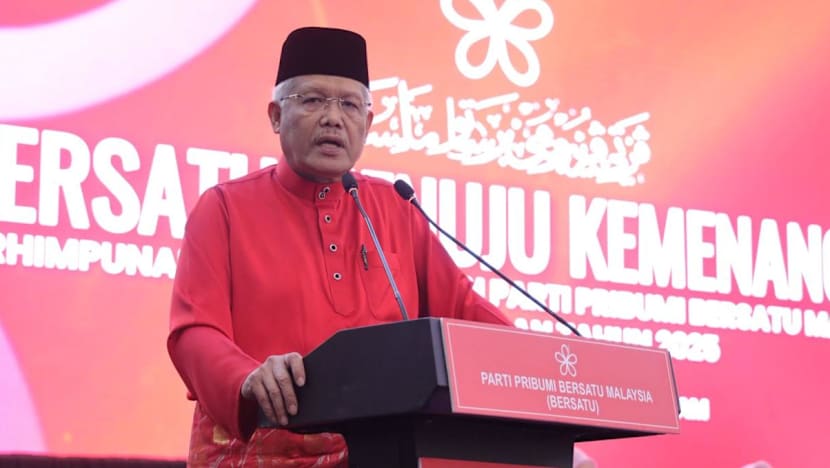
Against this backdrop of succession speculation and rising internal tensions, Bersatu parliamentarians, including Hamzah and Muhyiddin, held a meeting at Muhyiddin’s residence in Kuala Lumpur on Nov 18.
The meeting was called after 19 Bersatu MPs sent a joint letter to Muhyiddin, protesting disciplinary action taken against Wan Saiful and Wan Ahmad Fayhsal.
A video released by Bersatu later that night showed the MPs who attended the meeting stating their support for Muhyiddin, suggesting a possible truce.
But following the conclusion of the Sabah polls, the opposing camps in Bersatu have been taking potshots at one another for the party’s failings.
Of the 42 seats contested by PN, PAS featured in six, while Gerakan fought in three constituencies.
Bersatu contested 33 seats but failed to secure any, resulting in an unmitigated loss that notably included the defeat of its vice-president, Ronald Kiandee, in Sugut constituency.
In contrast, Bersatu had won 11 of the 18 seats it contested during the 2020 Sabah polls, Hamzah had been quoted as saying.
Those reportedly aligned with Hamzah have reportedly blamed Muhyiddin for the heavy losses in this year's polls.
Sabah Bersatu secretary Yunus Nurdin said at a press conference on Dec 4 that the party’s crushing defeat was caused by the weakness of Muhyiddin’s leadership.
Yunus claimed the party was hampered by internal disputes and action against leaders who had spoken out against Muhyiddin.
“We want the president to take responsibility for his failures and urge him to step down as Bersatu president and Perikatan Nasional chairman,” said Yunus.

But a high-ranking Bersatu leader told Â鶹 that Hamzah, who was Bersatu's Sabah election director, had worked in a silo without consultation with the rest of the party.
“There are those who think Hamzah should lead the party, but he can’t deliver,” the leader said, on condition of anonymity.
“Muhyiddin is not perfect, but everyone should work together as a team to make him better. The party is divided because of the actions of some leaders who are too ambitious,” said the leader, who claimed that he was not aligned to anyone except the party and, by extension, to its president.
In his view, however, PN stands a strong chance at the next GE due to widespread dissatisfaction with the current government, and because he believes the Malaysian public is not interested in Bersatu’s internal politics.
“It is not about us being so great, but many people want to see Anwar out,” he claimed.
“PN is the only other choice. In 2018, voters wanted (former Prime Minister) Najib (Razak) out and voted for Bersatu and PH despite us not being that strong.”
That government, led by Mahathir Mohamad, did not last long.
In 2020, the “Sheraton Move” crumbled the administration from within, with part of the plot reportedly hatched at the Sheraton Hotel in Petaling Jaya. More than 30 MPs from the ruling PH alliance defected, bringing the government down after just 22 months in power.
This led to the appointment of Muhyiddin as prime minister, as Bersatu, PAS, and BN joined hands to form a new ruling coalition.
However, Muhyiddin’s tenure lasted only until August 2021 when some MPs from BN’s main component party, United Malays National Organisation (UMNO), pulled their support, ultimately leading to Ismail Sabri Yaakob replacing Muhyiddin as prime minister.
Â鶹 has contacted Muhyiddin for comment.
MUHYIDDIN OR HAMZAH FOR PM CANDIDATE?
It was at Bersatu’s AGM in early September that delegates unanimously agreed to name Muhyiddin as their prime minister-in-waiting should PN win GE16.
This declaration immediately became a source of friction, according to Wan Saiful.
He admitted collecting statutory declarations from several MPs within Bersatu to stop Muhyiddin from bringing the PM-candidate resolution to its AGM, but this was interpreted as an attempt to overthrow Muhyiddin.
“PAS has clearly hinted that they don’t want Muhyiddin as prime minister but Muhyiddin pretends not to understand it,” he said.
He pointed to a statement made by PAS president Abdul Hadi Awang during the PAS Muktamar (general assembly) that was held about one week after Bersatu’s AGM.
“People like me aren’t qualified anymore. We will choose someone who is healthy and under 70 years old to be our prime minister candidate. Let it be someone who is physically strong,” Abdul Hadi reportedly said.
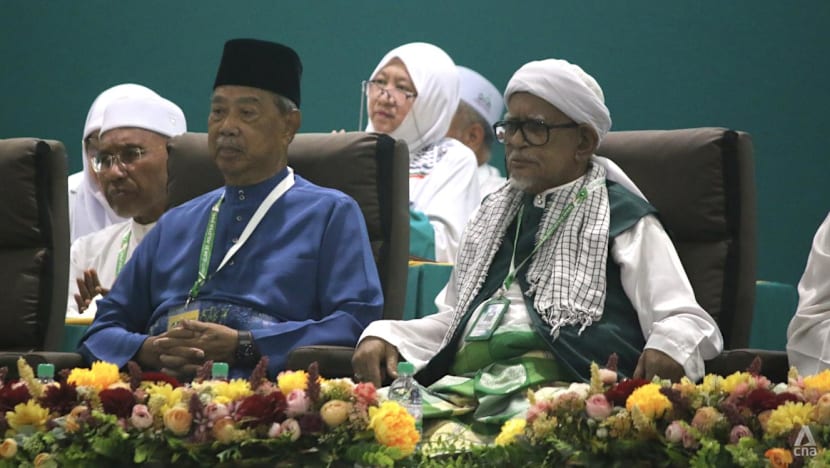
“We have a bigger partner in the coalition, but we are choosing to ignore what they say. It's not healthy,” said Wan Saiful.
He touted 68-year-old Hamzah, who is opposition leader, as having the most potential to be PN’s prime ministerial candidate, saying that Hamzah has the ability to manage people well.
“He is more of a consensus builder and people are very comfortable with him. His leadership style is more contemporary,” said Wan Saiful.
An observer, former Health Minister Khairy Jamaluddin, has said that PAS’ decision to favour Hamzah was strategic, especially with the king potentially playing a decisive role in determining the next prime minister in the event of a hung parliament.
“Hamzah is seen as someone more acceptable to the royalty. He is also, for now, devoid of the political baggage that Muhyiddin carries with his corruption case,” wrote Khairy in a commentary published on Sep 30 on the Fulcrum website of Singapore’s ISEAS-Yusof Ishak Institute.
“In Hamzah, they see someone who has a better chance of returning PAS and other PN allies to power,” added Khairy.
Asked during his BFM interview if he wanted to be prime minister, Hamzah said he did not know how to answer the question because he started out as a reluctant politician.
“But once given a job, I will do it according to what I can. I am not looking to say I want to be prime minister, no … I might be given a task and I will do that job,” he said.
“If I was never given a task, it’s okay but the most important thing is I would like to do a good job for the people of this country.”
When approached by Â鶹, Fadhli Shaari, PAS’ information chief, refused to be drawn into the debate over who the prime ministerial candidate should be. He said PN should first prioritise victory in the polls.
“The most important thing is to win, and then we can discuss the name of candidates, as this is the prerogative of the king,” he said.
Fadhli, however, acknowledged that in Malaysia’s multicultural context, it would be difficult for the Islamist PAS to field a candidate who could garner wide acceptance.
PAS, for all its popularity in the Malay heartlands, has often been criticised for failing to appeal to the non-Malay population or address non-Muslim fears of an Islamic theocracy.
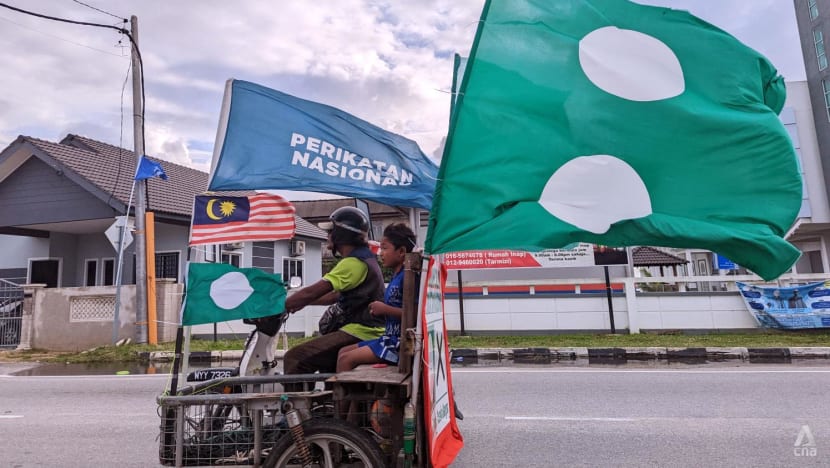
ISEAS-Yusof Ishak Institute’s visiting fellow Amrita Malhi wrote in a commentary in April that PAS’ “exclusionary narratives” and its leaders’ consistently “chauvinistic statements” have alienated non-Muslims.
“Its leaders’ statements cast these minorities as threats to Malay and Muslim power, arguing for their rights and freedoms to be stripped on the one hand; while, on the other, seeking to reassure them that they would be safe under PAS rule,” she wrote.
This fails to reassure the minorities, leaving many Malaysians concerned that PAS is seeking co-option into an “Islamic unity” government, she added.
At PAS’ general assembly in September, in laying out the party’s aim of wresting the Pahang, Perak and Selangor states from the incumbent coalition, Abdul Hadi had pledged that the Islamist party would lead the country’s “pluralistic” society without neglecting the rights of non-Muslim communities.
Meanwhile, the Bersatu leader who declined to be named argued that any coalition must name its candidate early. He claimed that Muhyiddin was still the best option for the top job.
“We can’t go into an election not knowing who is going to lead us. When you go into any car, you want to know who your driver is. You can’t have four or five drivers. Similarly, voters would want to know who is going to lead the country,” he said.
MIPP president P Punithan told Â鶹 that the party supports Muhyiddin as their prospective PM candidate.
“There is no issue about this and there is still time to make a decision,” he said.
Political analyst Zaharuddin Sani Sabri of Global Asia Consulting agreed that PN should name its prime ministerial candidate early, and pair them with deputies from both PAS and Bersatu in order to project unity and a clear line of succession.
Muhyiddin is experienced but “polarising”, he said, while Hamzah seems to be a compromise that is accepted by PAS, although he is untested nationally.
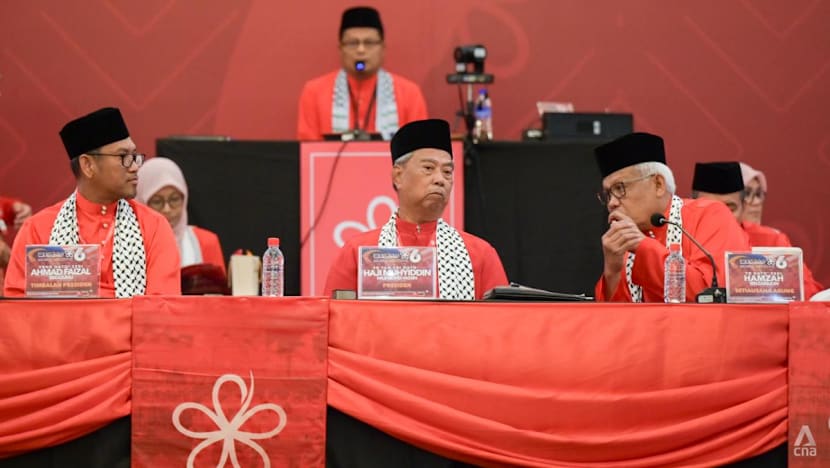
Hamzah previously held various ministerial posts, including as Minister of Home Affairs and Minister of Domestic Trade, Cooperatives and Consumerism.
Syaza of IIUM believes Hamzah's faction lacks sufficient support, which is why he has been unable to unseat Muhyiddin as Bersatu president.
If Bersatu ultimately affirms its decision on Muhyiddin and internal protests subside, PAS would be ready to work with Bersatu under Muhyiddin and focus on the elections, she said.
“PAS supporters are known to follow their leaders, so it’s not difficult to bring them around to a decision,” she said.
WHY PAS NEEDS BERSATU
While some grassroots members have suggested that PAS should go solo, Syaza said the party needs Bersatu at the strategic level to expand its acceptability outside of its core electorate.
The alliance is crucial, even given the perception that Bersatu has benefited more by riding PAS’ momentum, she said.
“Yes, (PAS) holds more seats but it is still not enough (to form) a government on their own. And if they come out aggressively saying they have more seats and thus deserve the leadership of PN, that might scare those wary of a PAS-led rule. I do think PAS believes they can get there one day, but not now,” said Syaza.
Zaharuddin agreed that PAS risks isolation if it decides to go alone.
“While they can maximise their Malay heartland seats with a clearer ideological identity, the ceiling is low in mixed and urban seats,” he said.
“PAS gains more by dominating PN from within than by leaving. An exit only makes sense if a new cross-ethnic alliance or post-election deal offers clear upside,” he said.
PAS was previously part of Anwar’s Pakatan Rakyat pact that was formed in 2008, along with DAP. But the coalition broke up in June 2015 due to irreconcilable differences, primarily between PAS and the Chinese-dominated DAP regarding the implementation of Syariah law (hudud).
Aside from PN’s internal problems, analysts believe its perennial problem is to win over non-Malay and urban voters, especially as it relies heavily on ethno-religious narratives for support from the Malay heartland.
Syaza said PN's major weakness is its failure to gain significant ground in non-Malay or mixed constituencies, which she believes must be its primary focus.
She believes that smaller coalition partners like Gerakan, or even the Malaysian Indian Congress (MIC) which is reportedly poised to join PN, are simply not strong enough to pose a credible challenge to PH.
MIC had passed a resolution to exit BN last month, saying that the partnership no longer provides space for the party to contribute meaningfully to national development.
“The only thing in their (PN's) favour, I think, is if PH continues to lose support and its so-called base will just not turn up to vote,” she said.
Zaharuddin said that while PN seems to be adding allies tactically, it still has not cracked the code of winning racially mixed constituencies.
“This expansion looks opportunistic rather than visionary. PN’s real challenge is convincing non-Malays and moderates it can govern fairly. Without that, PN risks winning numbers but losing mandate,” he said.
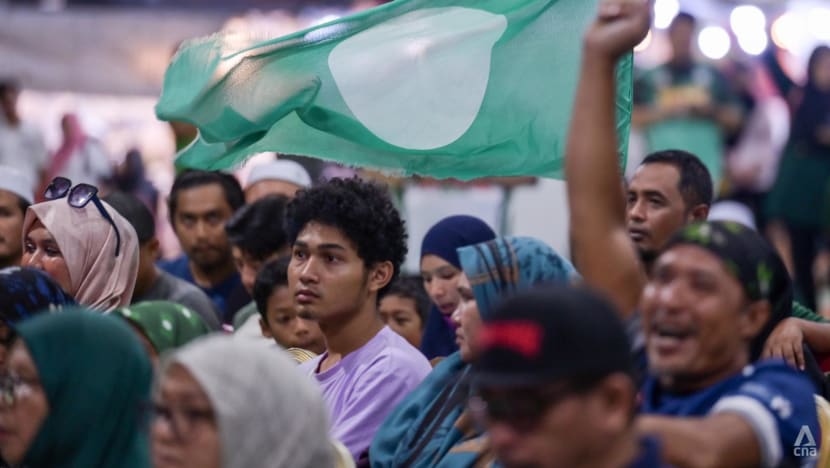
MIPP’s Punithan said the Indian community had its concerns about PAS and the “green wave” narrative, but claimed Indian support for the coalition has increased since MIPP joined PN two years ago.
While there have been PAS leaders who made insensitive statements, they did not reflect the party’s stand, he said.
He said the MIPP has continuous engagements with PAS and that he communicates directly with Kedah Chief Minister Muhammad Sanusi Md Nor regarding issues affecting the Indian community, such as temples and Tamil schools.
“I can see that they are trying to engage with the Indian community and understand the community’s needs,” he said.
Ahmad Fadhli of PAS said the party is now prioritising efforts to win over non-Muslim voters, admitting that much work remains due to the generally poor impression they have of the party.
"It’s not easy because we have been demonised all this while and there is a lot of work to be done. That is our main focus now," he said.
“But we must also remember that our acceptance is higher in places like Selangor compared to the level of acceptance PH has managed to achieve in Kelantan,” he added.
PAS has ruled Kelantan since 1990.
BN-PH ALLIANCE LIKELY TO HOLD
There are also questions about whether the uneasy alliances that make up the unity government will go up against one another in the upcoming state and national polls.
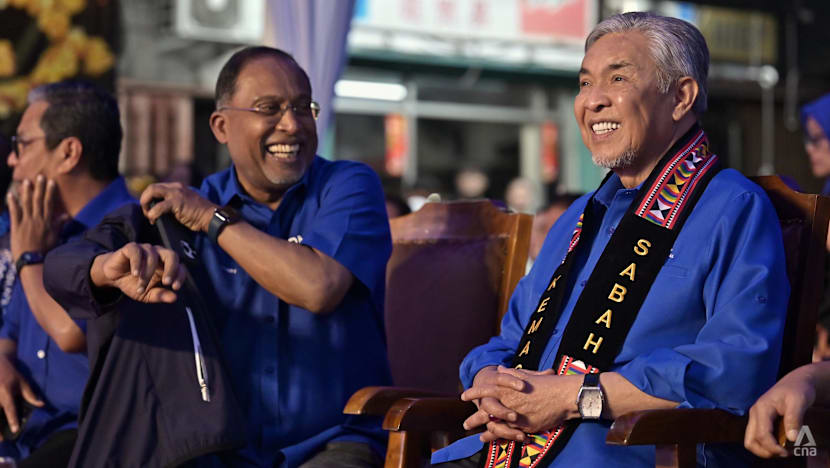
Since the 2022 election, PH and BN — once bitter rivals — have avoided competing against one another in state polls and by-elections. Analysts believe this electoral pact will hold for the next GE at least.
This is for political expediency, said Ahmad Fauzi Abdul Hamid, a political scientist with Universiti Sains Malaysia, citing the relationship between Anwar and his deputy Ahmad Zahid who is also the president of UMNO.
“The crucial factor here is leadership. They have a special relationship extending more than 30 years to their days in UMNO,” Ahmad Fauzi told Â鶹.
BN comprises UMNO as its lead party alongside Malaysian Chinese Association (MCA), MIC and the United Sabah People's Party.
MCA had on Sunday (Dec 7) passed a resolution to quit BN and set its own course should any BN component party work with DAP.
However, the party's president Wee Ka Siong dismissed the idea of joining PN, saying that the Chinese community had difficulty accepting PAS due to controversial and religiously insensitive remarks made by the Islamist party's leaders
Dr Fauzi said that UMNO's decision to work with PH in the next election is sealed regardless of MCA's stance.
Syaza agreed, saying BN-PH cooperation is conditional on Ahmad Zahid retaining the BN chairmanship. She also predicted Anwar would do everything possible to ensure the pact remains intact for the next election.
If PN manages to get more seats than PH in the next GE, however, it is possible BN could work with PN, Syaza said.
“BN being BN, I wouldn’t be shocked if they jump to PN if they can somehow get more seats than PH,” she said.